
A Parisian Reputation, Balkan Inspiration. After almost a century, Čermák’s paintings are brought together in a major exhibition in Prague
Spoils of War, a painting on loan to Prague from the Musées royaux des Beaux-Arts de Belgique in Brussels, measures almost four metres in width. It took six people to move it. Even larger is Čermák’s final project: the composition Resting with Captive Herzegovinian Women. It has been preserved as a charcoal drawing on canvas and was transported to the exhibition rolled around a cylinder. Both works will be on display at GHMP Knihovna in the retrospective Jaroslav Čermák: Myths of European Reality, organised by Prague City Gallery in collaboration with the National Gallery Prague. From 4 November 2026 to 28 February 2027, it will also showcase works on loan from abroad, many of which the Czech public will see for the very first time.
Jaroslav Čermák’s paintings are now scattered across major European museums and private collections. The first major exhibition in almost a century brings his paintings together in one place once again and, alongside well-known historical compositions, will showcase portraits, landscapes, still lifes, drawings and graphic reproductions. Works from international gallery storage facilities will be complemented by those from the GHMP’s collections and 53 loans from the National Gallery Prague. Lenders include, for example, the Musée du Louvre in Paris, the Belgian Koninklijk Museum voor Schone Kunsten Antwerpen – Vlaamse Gemeenschap, the Amsterdam Museum and the Nacionalni muzej moderne umjetnosti in Zagreb. Contributions from Czech institutions include the National Museum, the Museum of Czech Literature and the Prague Castle collections.
“We are familiar with many of Čermák’s paintings only from reproductions, which for decades have shaped our perception of 19th-century Czech painting. This exhibition will allow visitors to encounter the originals, compare their scale and painterly technique, and view them alongside works that have remained in foreign collections. As a result, our collection of Čermák’s works will also be placed in a context that clarifies his position on the European art scene,” says Magdalena Juříková, Director of Prague City Gallery.
Two monumental compositions and one unfinished painting
Spoils of War (Herzegovina, 1862) from 1868 depicts young Christian women abducted by soldiers of the Ottoman Empire and taken away to be sold. This oil on canvas, measuring 240 × 394 centimetres, is one of the main works on loan from abroad. It won a gold medal at the Paris Salon and was subsequently purchased by the Belgian state. In the exhibition, the painting is displayed in the hall dedicated to the Paris Salons. In the painting, Čermák presented the anti-Ottoman struggles in Herzegovina to a European audience from the perspective of their victims.
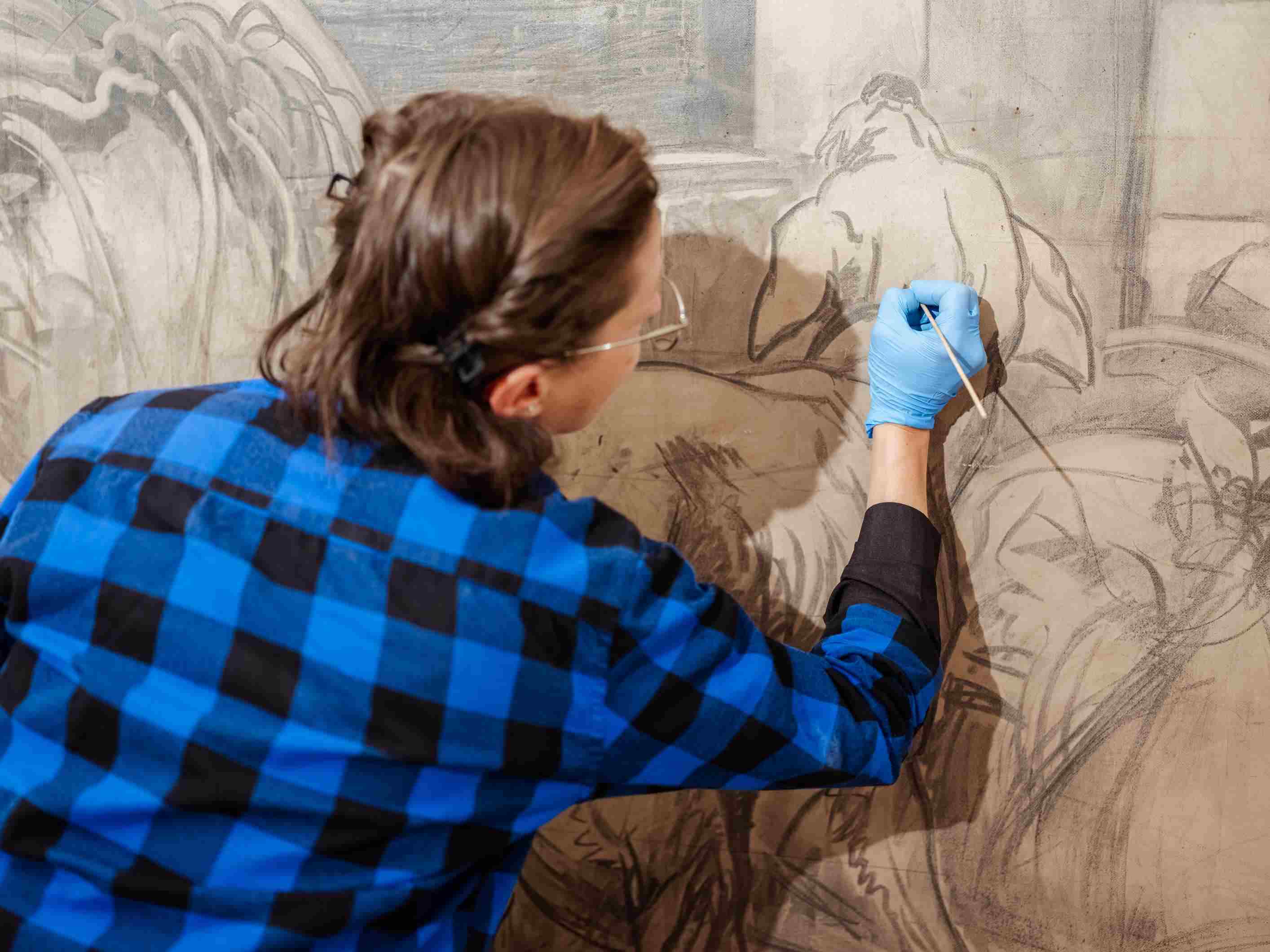
Alongside the completed paintings, visitors will see the unfinished state of the composition Resting with Captive Herzegovinian Women (1878). It was commissioned by the Society of Patriotic Friends of the Arts, the predecessor of today’s National Gallery Prague. However, the 47-year-old Čermák did not manage to complete this commission for the prestigious Prague institution, as he died in the same year. The National Gallery, however, has preserved a preparatory charcoal sketch on canvas measuring 335 × 506 centimetres, which allows visitors to see the layout of the entire intended scene.
Another key work in the retrospective is The Wounded Montenegrin (1873), a painting created for Josip Juraj Strossmayer, Bishop of Bosnia and Syrmia and a diplomat, on loan from Zagreb. The motif of a wounded warrior being cared for was one of Čermák’s most successful subjects. The exhibition will also feature a replica of the work from 1874, from the collections of the National Gallery in Prague.
From a Paris studio to scenes of war
Curators Markéta Theinhardt, Kristýna Hochmuth, Vjera Borozan and Helena Musilová have divided the exhibition into several thematic sections. The exhibition opens with the 1863 Portrait of Hippolyte Gallait – Čermák’s great love and the wife of his teacher, the Belgian painter Louis Gallait. The painting comes from the collections of the GHMP. This is followed by works from the 1850s and 1860s, reflecting the start of Čermák’s career and his first artistic successes. These are followed by sections entitled Paris Studios, Philhellenism, Prints and Reproductions, The Art Trade and War and its Consequences. Separate sections also examine the eroticisation of depictions of South Slavic women, the relationship between Orientalism and Slavic mutuality, and Čermák’s predecessors, contemporaries and successors.
Contemporary descriptions and images of the studios of Čermák’s contemporaries provide an insight into the appearance of a Paris studio. However, no depiction of his own Paris studio has survived. We do know, however, that it was filled with traditional costumes, weapons and objects brought from Dalmatia and other regions of the Slavic South. The painter used them as models, dressed his models in them and combined them with studies from his travels.
“In Čermák’s paintings, one might find the face of a Parisian model, a traditional costume from Montenegro and a composition echoing earlier Romantic painting. We want to show how such a scene came into being and why it might have meant something different to a French audience than to Czech or South Slavic viewers. It is precisely the tension between personal experience, studio work and the audience’s expectations that helps us understand the title Myths of European Reality,” explains Helena Musilová, Curator, Deputy Director for Curation and Head of the Department of Collections at the GHMP.
Philhellenism – that is, European support for the Greek struggle for independence from the Ottoman Empire – inspired Čermák’s engagement with South Slavic themes. Among other things, he drew on the work of the French Romantic artist Eugène Delacroix: he turned his attention to endangered families, female captives and the wounded. At the same time, the exhibition explores how compassion for the victims intertwined with a fascination for exotic costumes and eroticised female figures. On display are Study of a Slavic Rayah (Herzegovina) (1860), Dalmatian Wedding (1875–1878) and Clash in the Mountains (1862–1864).
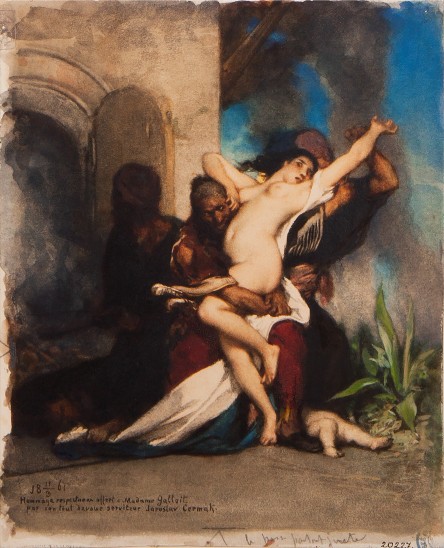
Jaroslav Čermák, Abduction of a Herzegovinian Woman (Abduction of a Montenegrin Woman), replica, 1861, Prague City Gallery
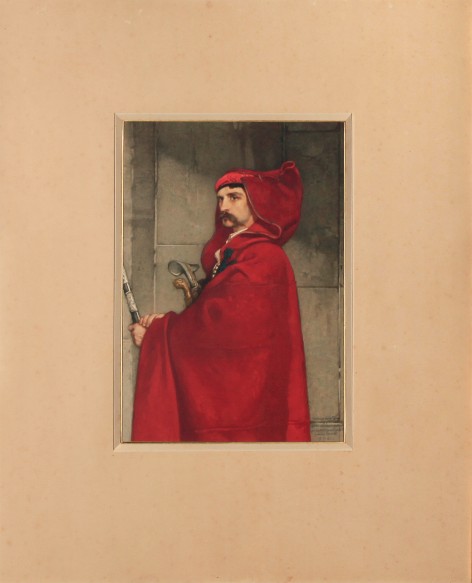
Jaroslav Čermák, Study of a Slavic Rayah (Herzegovina), replica, 1861, Prague City Gallery
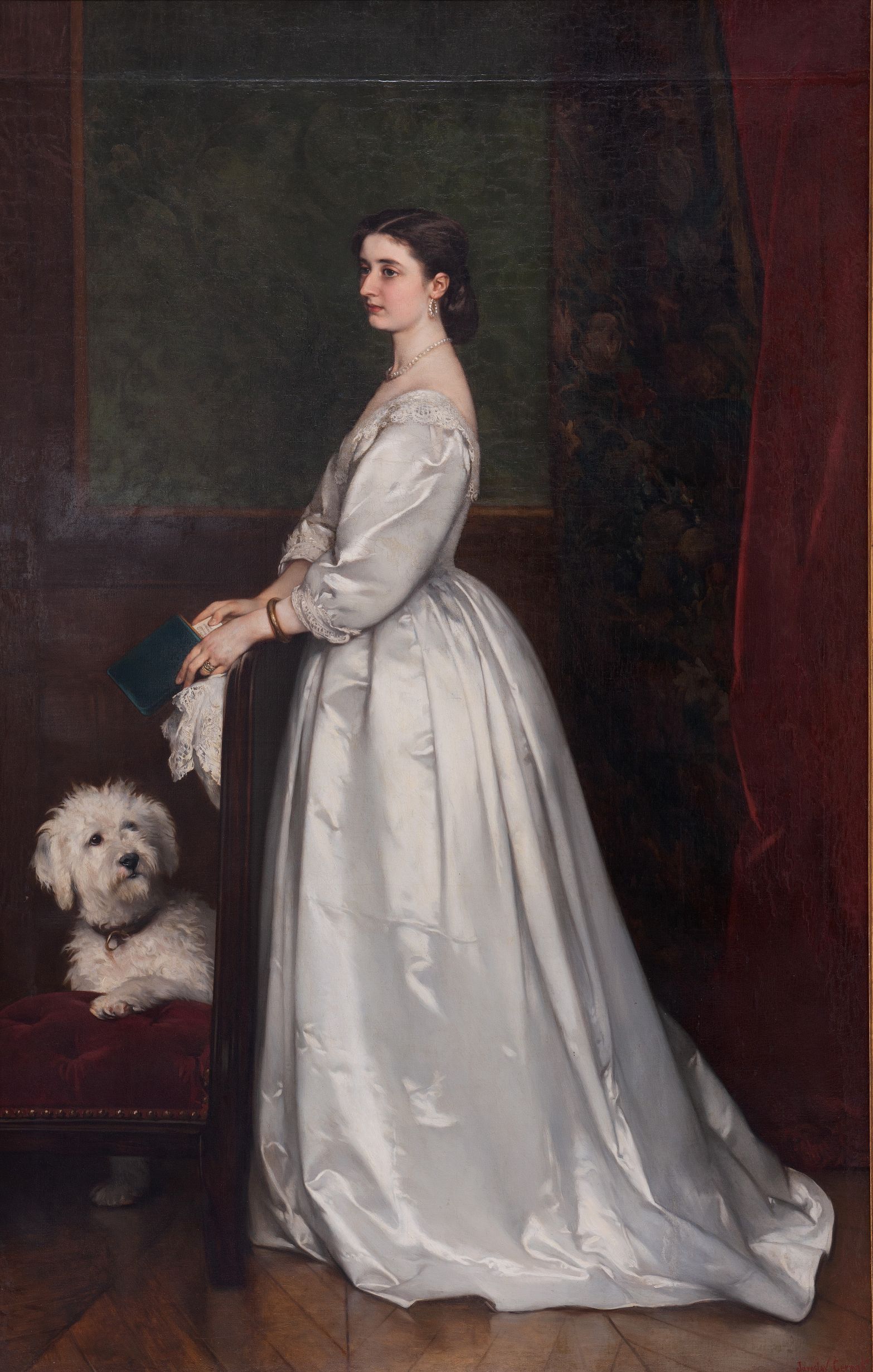
Jaroslav Čermák, Portrait of Hippolyte Gallait (Portrait of Amélie Gallait), 1863, Prague City Gallery
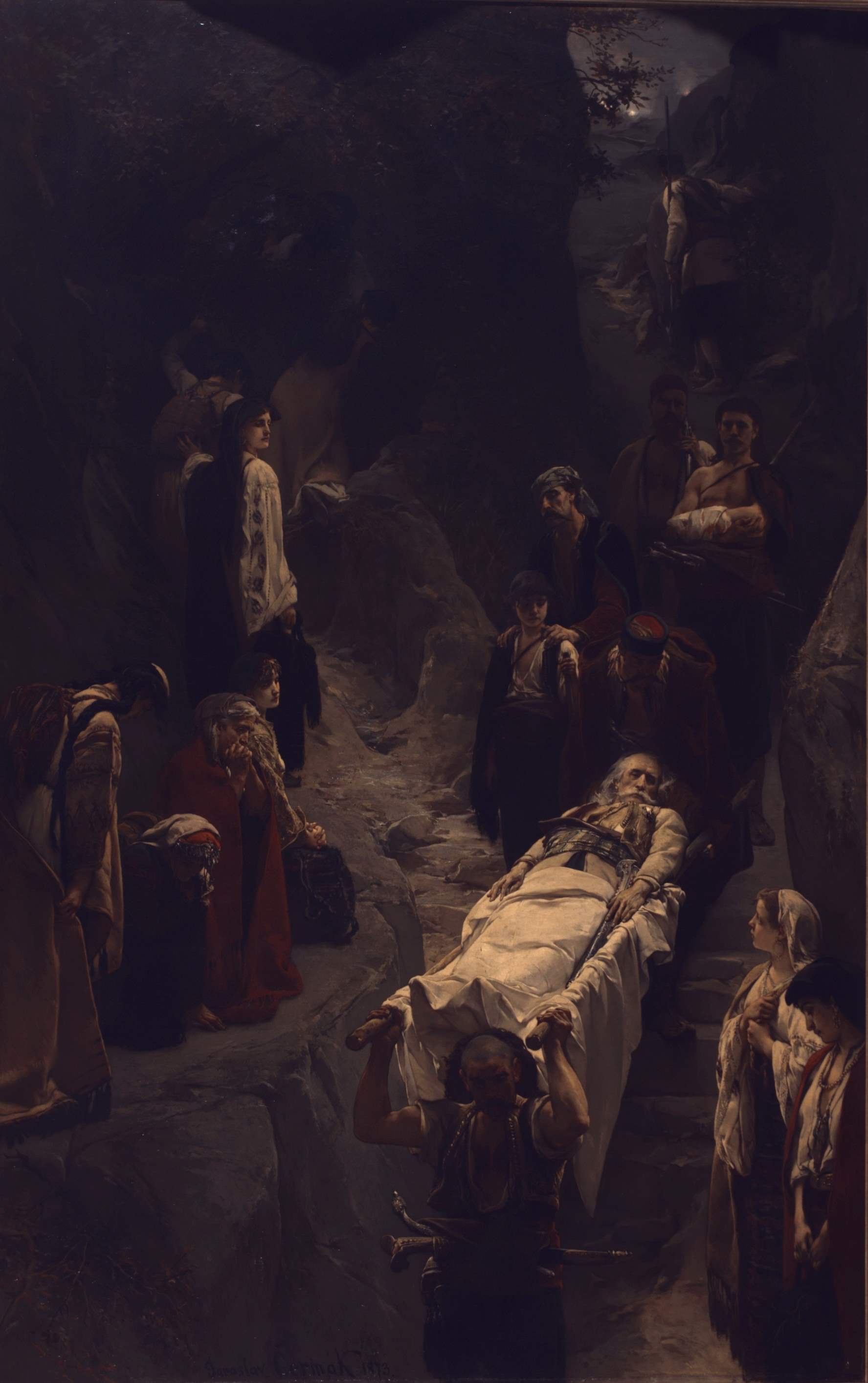
Jaroslav Čermák, Wounded Montenegrin, 1873, Nacionalni muzej moderne umjetnosti, Záhřeb
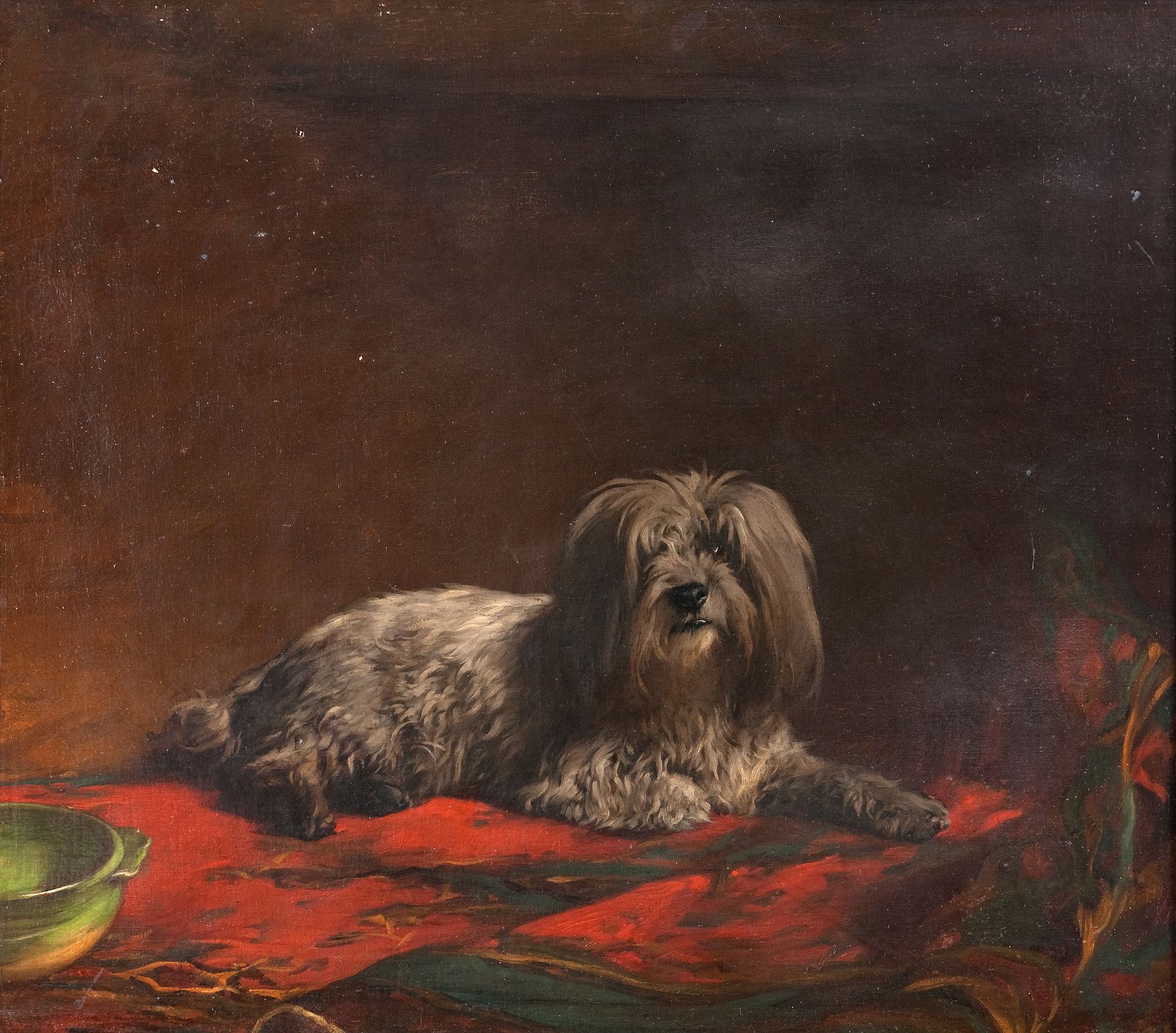
Jaroslav Čermák, Lev the Dog, 1864, Prague City Gallery
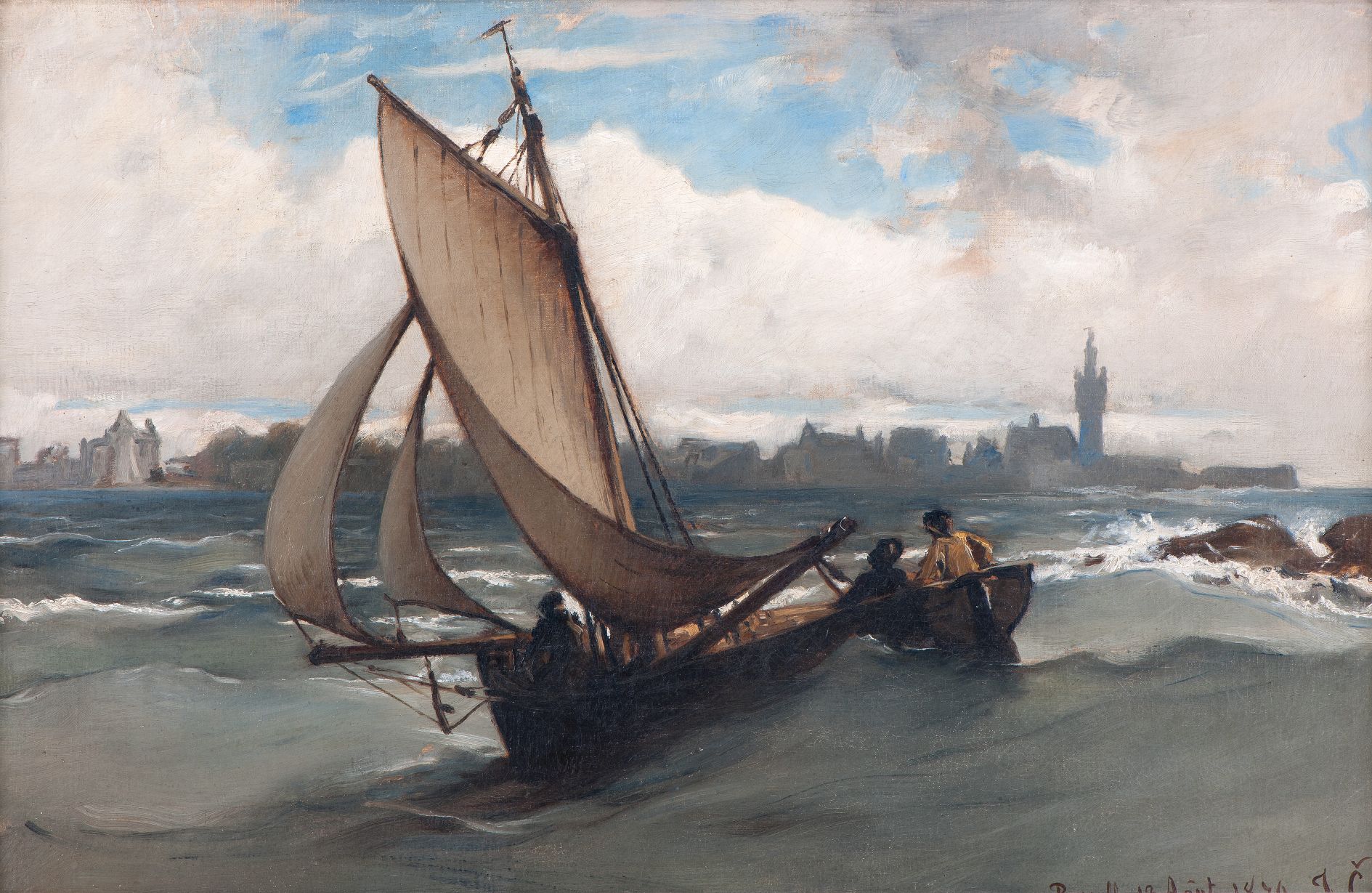
Jaroslav Čermák, Marine Scene at Roscoff, 1870, Prague City Gallery
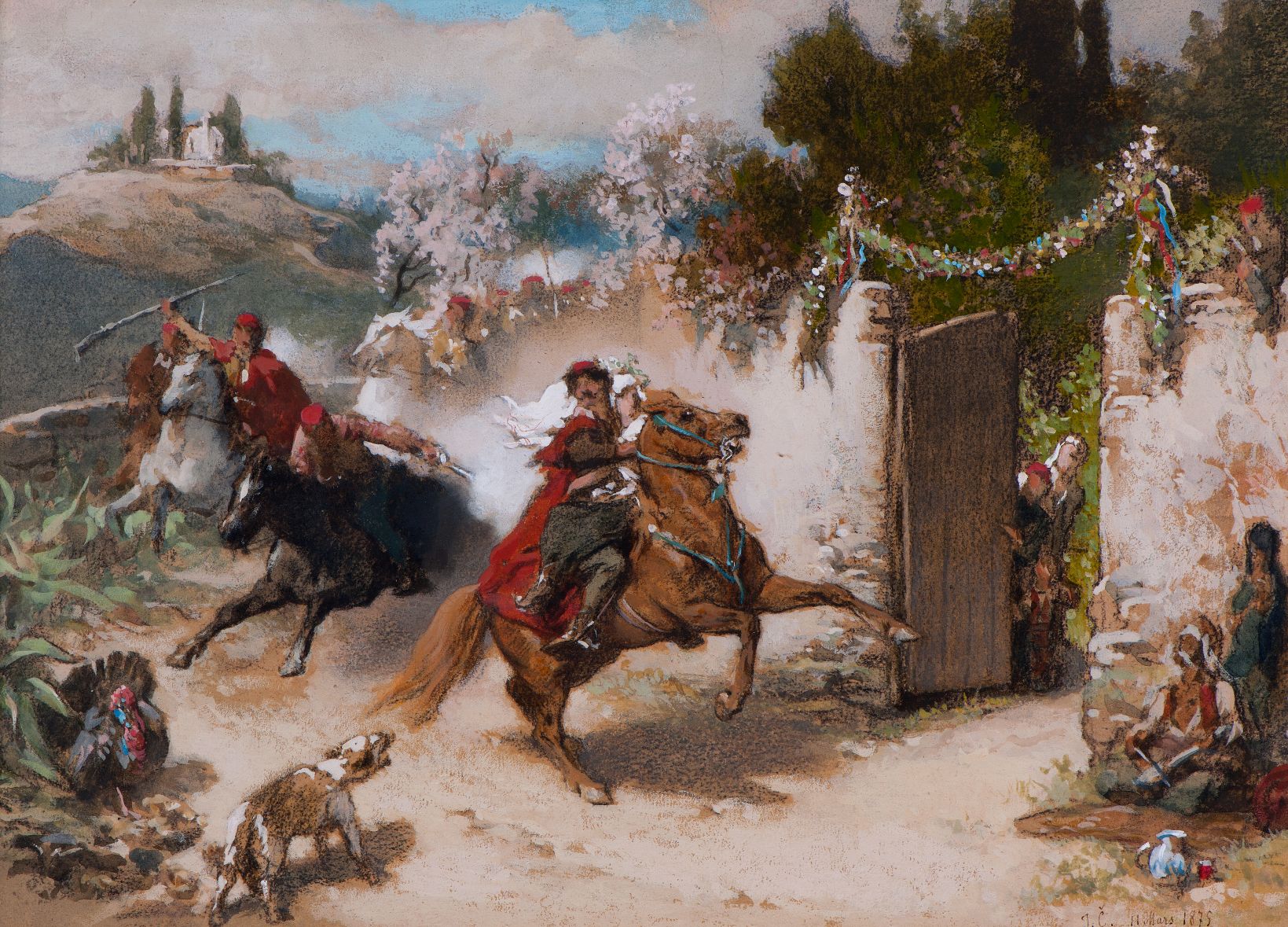
Jaroslav Čermák, Dalmatian Wedding, 1875, Prague City Gallery
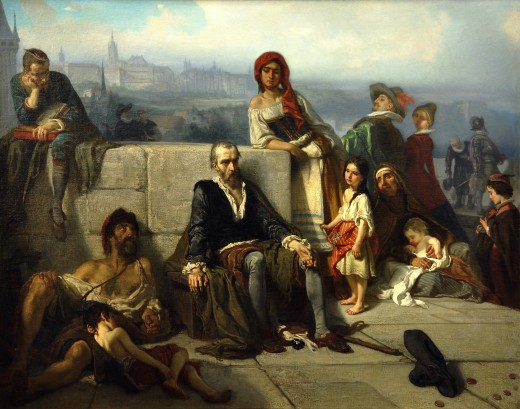
Jaroslav Čermák, Šimon Lomnický Begging on Prague Bridge (The Old Age of Lomnický of Budeč), 1853, private collection, photo: Milan Havel
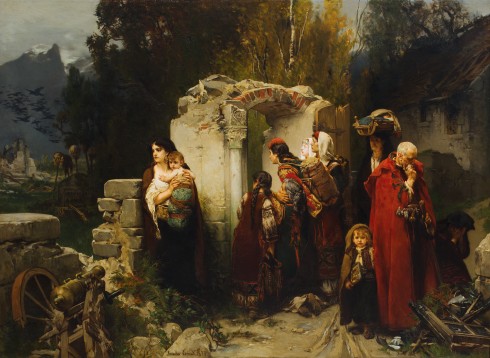
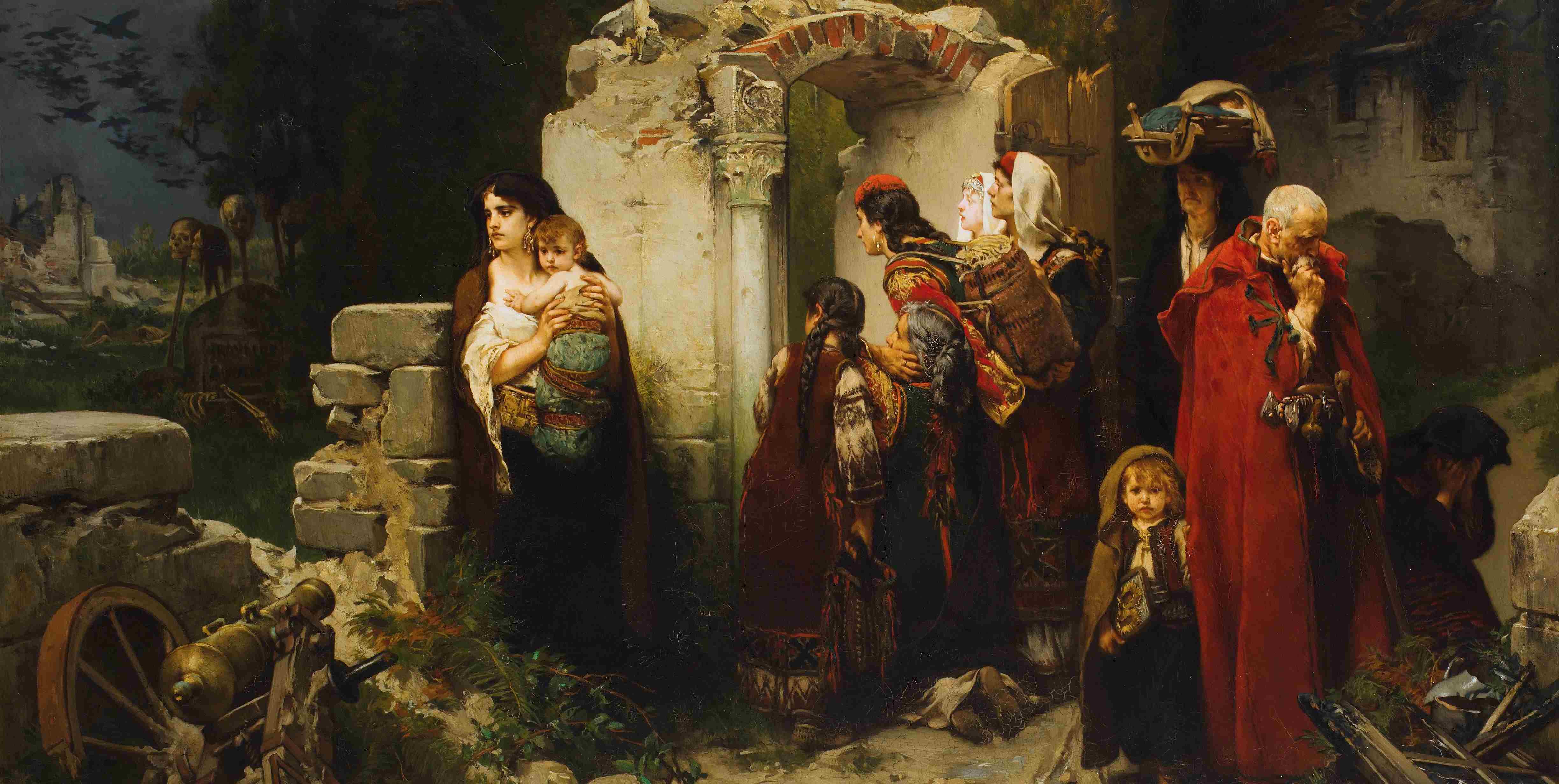
Jaroslav Čermák, Herzegovinian Women Returning to a Village Burned by Bashi-Bazouks (Of Herzegovinians, Returning to their Village Pillaged by Bashi-Bazouks, Finding the Cemetery Ravaged and the Church Destroyed; Herzegovina 1877; Bosnia in 1877; Returning to the Village), 1877, Prague Castle Administration, photo: Jan Gloc
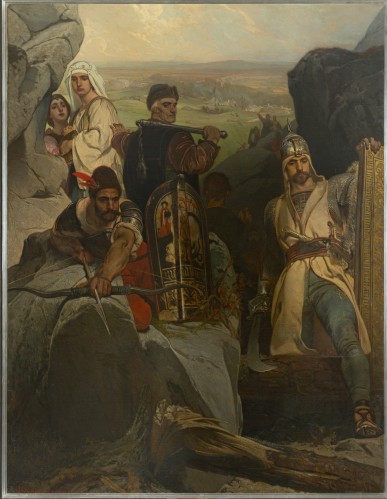
Jaroslav Čermák, Hussites Defending a Mountain Pass (Taborites Defending a Holloway), 1857, National Gallery Prague
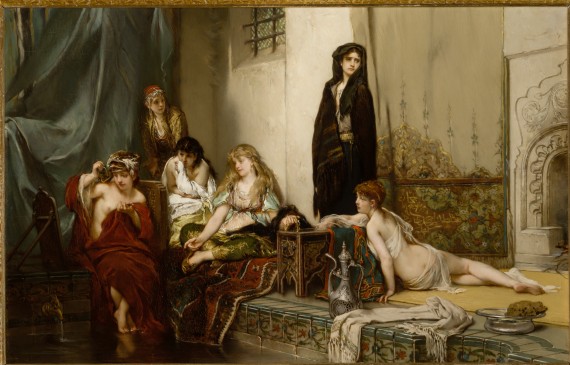
Jaroslav Čermák, In a Harem (Montenegrin Women in a Harem), 1877, National Gallery Prague
Jaroslav Čermák, Resting with Captive Herzegovinian Women, 1878, National Gallery Prague
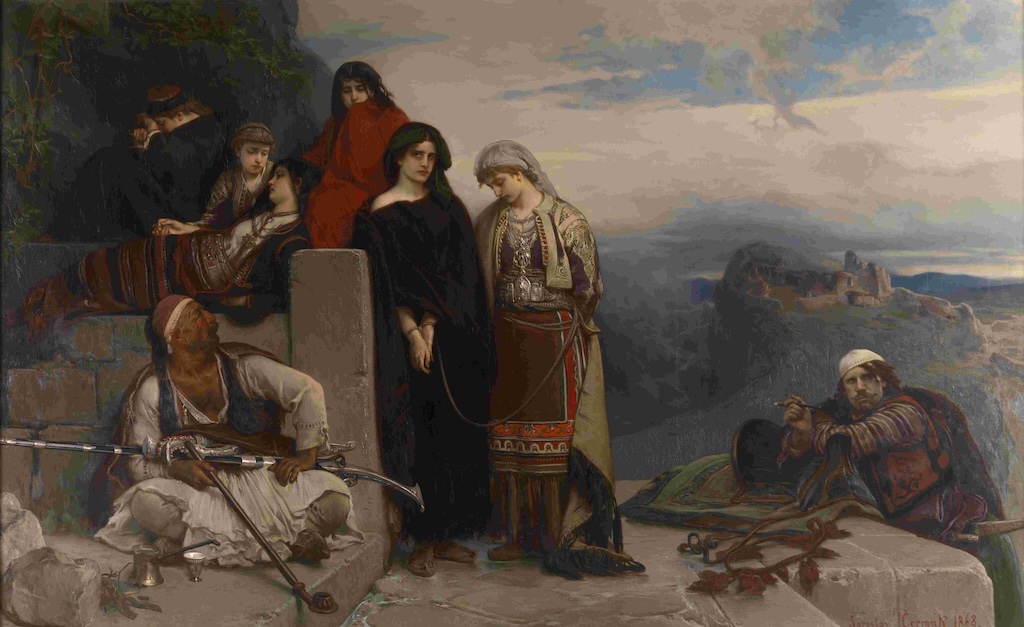
Jaroslav Čermák, Spoils of War (Herzegovina, 1862), 1868, Musées royaux des Beaux-Arts de Belgique, Brusel
Photos of artworks in print quality are available here.
Paintings for the Salon and for art dealers
A native of Prague, traveller and painter with a studio in Paris, he quickly managed to build up a clientele of wealthy patrons. The exhibition therefore also shows how he managed to monetise his works and bring them to the public. Alongside the paintings exhibited at the Paris Salons, the retrospective also features Čermák’s prints and reproductions. The painter initially produced his prints himself; later, professional printmakers and companies, including the Parisian firm Goupil & Cie, helped to disseminate his work. Thanks to these prints, his subjects reached people who had never seen the originals.
“Čermák can be described as one of the first ‘Czech Parisians’. At a time when Paris was the metropolis of European art, he managed to build a successful career there and paved the way for other Czech artists, including Václav Brožík, Alfons Mucha and František Kupka,” says Kristýna Hochmuth, Curator at the National Gallery Prague.
Another facet of his painting is represented by the Breton series, including Marina of Roscoff (1870) from the GHMP collections. Instead of dramatic scenes, these works present the Atlantic coastline, sailing boats swaying at sea and the daily hard labour of local fishermen and sailors, observed with care.
Works by other artists illustrate how Čermák’s motifs and pictorial techniques spread and inspired younger artists: alongside Václav Brožík and Ludvík Kuba, the exhibition highlights František Bohumír Zvěřina and Alfons Mucha, with one of Mucha’s posters on loan from the Museum of Decorative Arts in Prague.
Seventeen conservators and a painting Čermák never painted
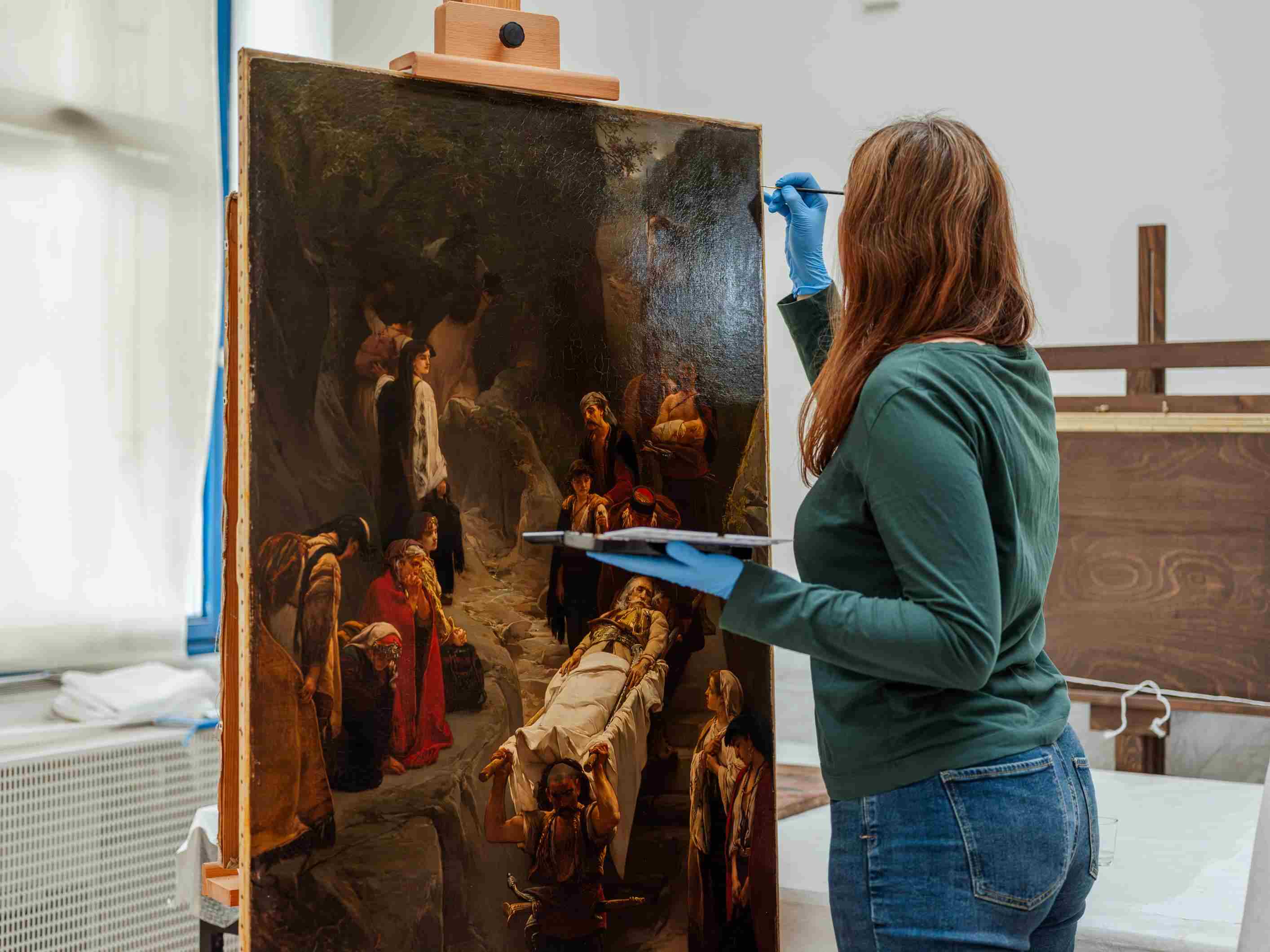
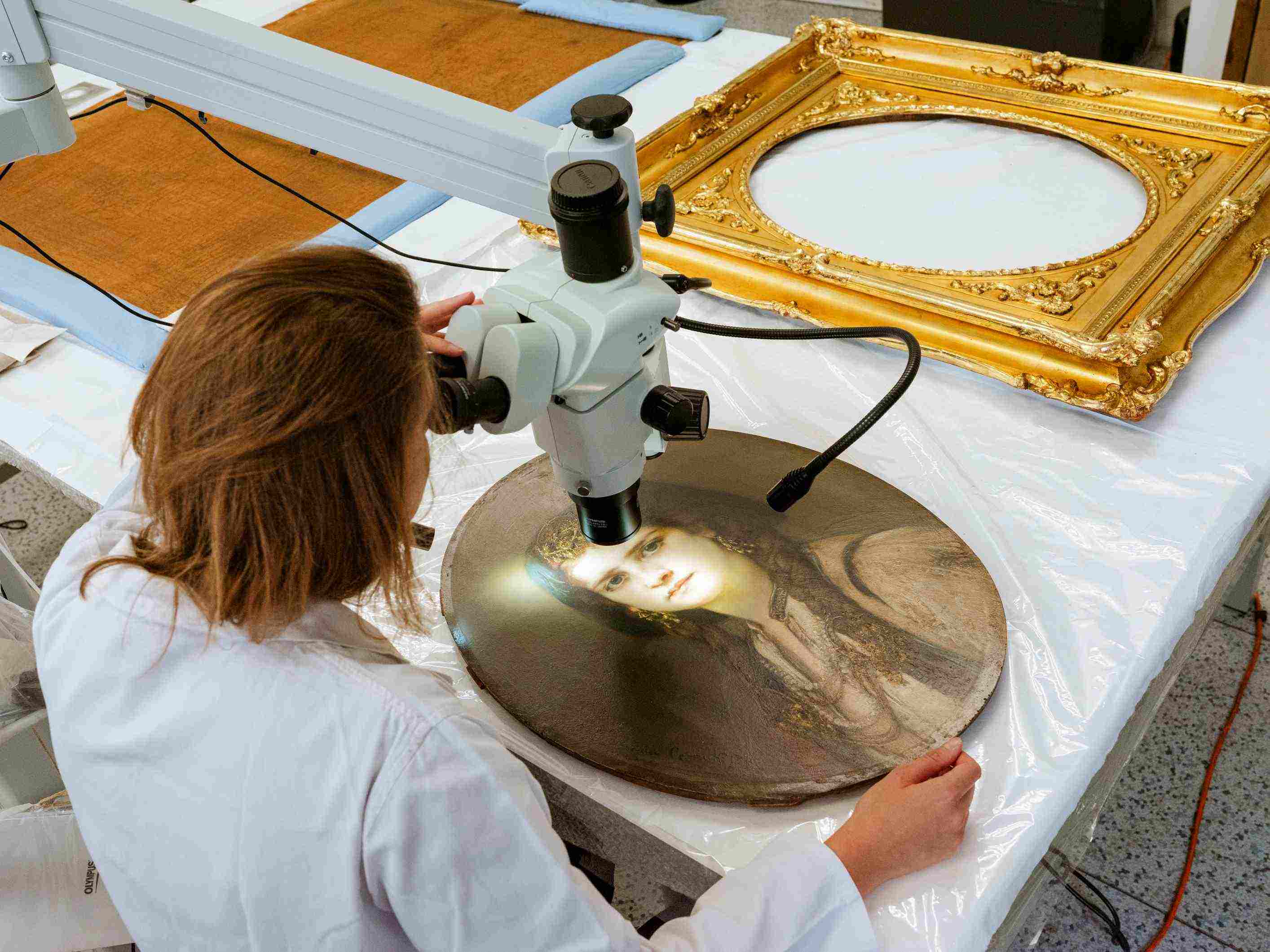
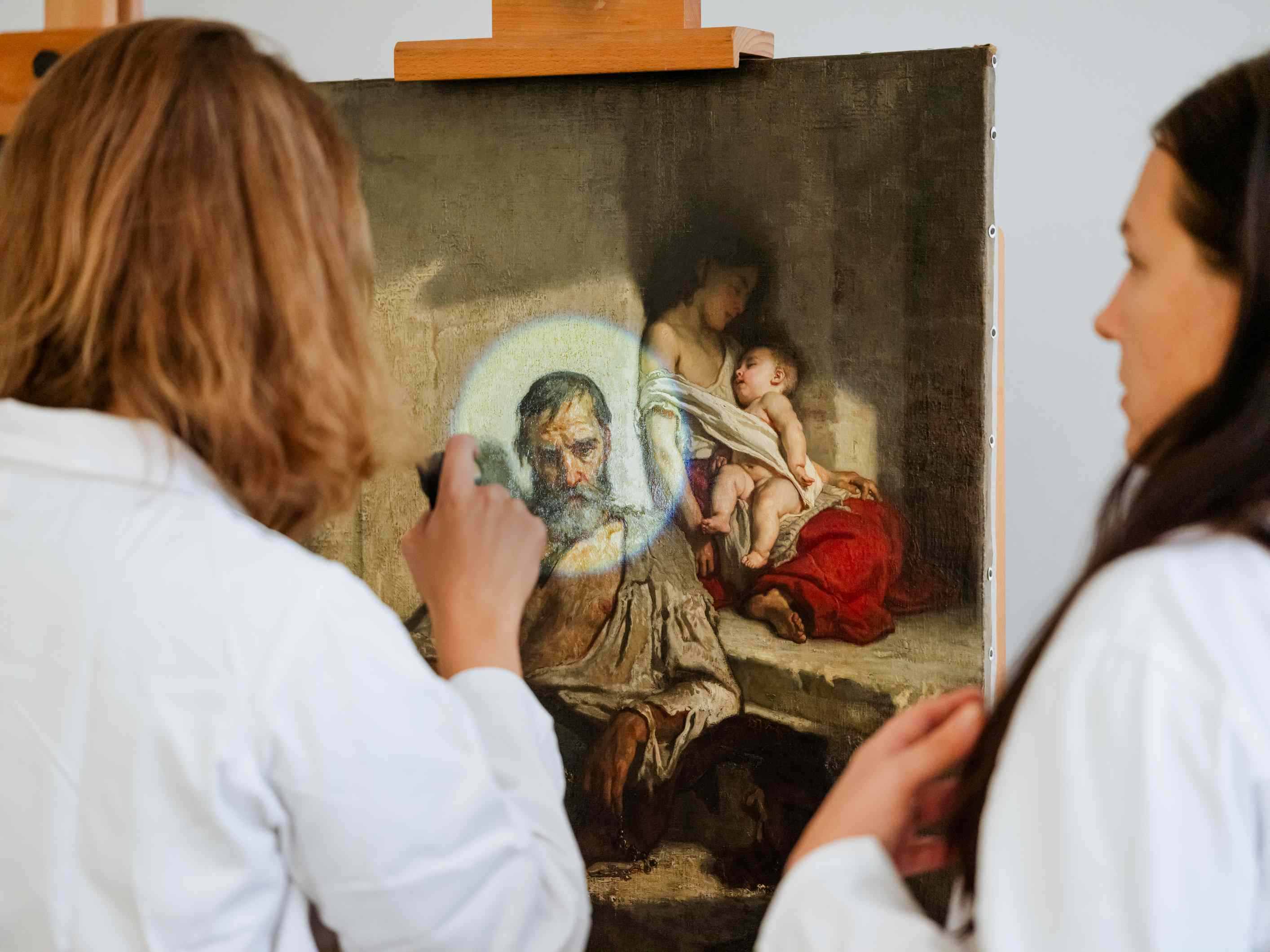
Several years of research preceded the preparation of the exhibition and the accompanying monograph Jaroslav Čermák. Myths of European Reality by a team of experts assembled and led by Markéta Theinhardt in collaboration with Prague City Gallery. The National Gallery Prague joined the project as a major lender and expert partner, contributing archival research, an investigation into painting techniques and restoration work. Seventeen conservators worked on preparing the exhibits: they focused on both the paintings and the historical frames. The restoration of Čermák’s works was supported by the Czech Ministry of Culture’s ‘Znovu na obdiv’ programme with a grant of nearly 1.5 million crowns. A number of works from the GHMP’s collections were also restored.
“This exhibition represents the culmination of several years of research and restoration work, which has yielded a wealth of new insights into the life and work of one of the most distinctive Czech artists of the 19th century. We are delighted that the results of this work can now be presented to the public on such an extraordinary scale,” says Olga Kotková, General Director of the National Gallery Prague.
The research has also led to a fundamental change in the attribution of authorship. The painting Golgotha, which the National Gallery received as a gift from an art dealer in 1945 on the understanding that it was a work by Čermák, has turned out to be by another artist. Nevertheless, it has its place in the exhibition – for it illustrates well the collaboration between art historians and conservators in verifying authorship.
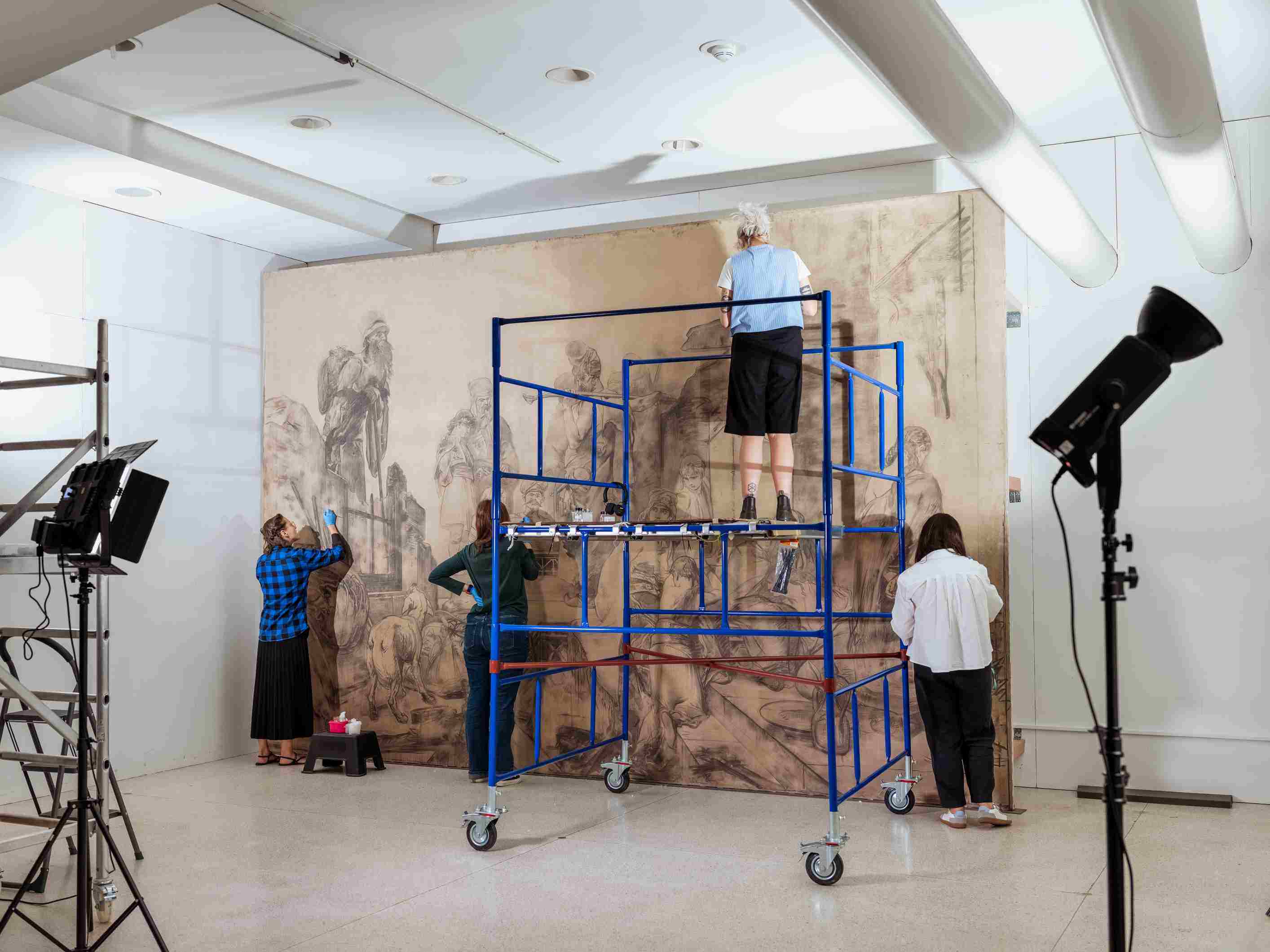
Photos from the restoration process, photo: Katarína Hudačinová
Photos from the restoration process, photo: Katarína Hudačinová
Photos from the restoration process, photo: Katarína Hudačinová
Photos from the restoration process, photo: Katarína Hudačinová
Photos from the restoration process, photo: Katarína Hudačinová
Photos of restoration process in print quality are available here.
Original compositions and tableaux vivants in the children’s studio
The exhibition also features an interactive studio for children, families and schools, organised by the GHMP in collaboration with the National Gallery Prague’s Audience Development Department. Located behind the bookshop, the interactive studio invites visitors to create their own compositions on a magnetic wall using details from Čermák’s works, while a mirrored wall nearby features empty frames that can be used to create self-portraits and tableaux vivants. Artists’ palettes featuring details and questions about the exhibition will encourage children to search for reference points within the display. There is also a large-format memory game, an illustrated timeline and a drawing session at a communal table.
The exhibition and the specialist monograph are complemented by the book Jaroslav Čermák. Romantický výlet po Evropě (Jaroslav Čermák. A Romantic Journey through Europe) by Monika Švec Sybolová (NGP), published by the National Gallery Prague, which introduces the painter’s life and work to children and young people.
4 November 2026 – 28 February 2027
GHMP Knihovna, Mariánské náměstí 98/1, Prague 1 – Old Town
Curators: Vjera Borozan, Kristýna Hochmuth, Helena Musilová and Markéta Theinhardt
Research Team: Vjera Borozan, Kristýna Hochmuth, Šárka Leubnerová, Helena Musilová, Markéta Theinhardt, Vít Vlnas and Markéta Vondrová
Graphic Design: Belavenir
Architectural Design: Tomáš Svoboda
The exhibition is held under the patronage of the President of the Czech Republic, Petr Pavel; the President of Montenegro, Jakov Milatović; the Ministry of Culture of the Czech Republic; and Tomáš Slabihoudek, Councillor for Culture of the City of Prague.
The exhibition and publication were produced with the financial support of the Ministry of Culture of the Czech Republic, Prague City Council, the Bohemian Heritage Fund, the publishing house Karel Kerlický – KANT and the following patrons of the GHMP, to whom we hereby extend our thanks: Vladimír and Ivo Popardowski – ABAS IPS Management, Petra and Tomáš Tesař – the MEDIRECO Endowment Fund, Eva Skalová – ALMOND, Veronika and David Karásek and Jana Hochmanová.
Tickets:
Available via the GoOut network or at GHMP ticket offices.
Location:
GHMP Knihovna
Mariánské náměstí 98/1
Prague 1 – Old Town
Open:
Tue–Wed 10 a.m. – 6 p.m.
Thu 10 a.m. – 8 p.m.
Fri–Sun 10 a.m. – 6 p.m.
Admission:
Full price: CZK 200 (adults), CZK 90 discounted (students aged 11–26 and seniors aged 65+, school groups accompanied by a teacher), CZK 50 discounted (children aged 6–10), CZK 450 family ticket, free admission – holders of the card certifying particularly severe disability, holders of the card certifying particularly severe disability with a guide, their guides, and holders of one of the following cards: GHMP Member, Member Plus, Patron
The building has wheelchair access.
For up-to-date information on accompanying programmes, guided tours and educational activities, please visit: ghmp.cz.
Media Contact:
Jana Smrčková, Head of the Department of Communication, Events and Publishing GHMP, jana.smrckova@ghmp.cz, +420 778 710 688
Jana Holcová, Press Officer of National Gallery Prague, jana.holcova@ngprague.cz, +420 777 748 089
Pavla Umlaufová, Partner PIARISTI, pavla.umlaufova@piaristi.cz, +420 723 901 326
Pavel Vokatý, PR Consultant PIARISTI, pavel.vokaty@piaristi.cz, +420 776 721 301
A catalogue of the same name as the exhibition was published and is available in the bookstore and on the GHMP website.