
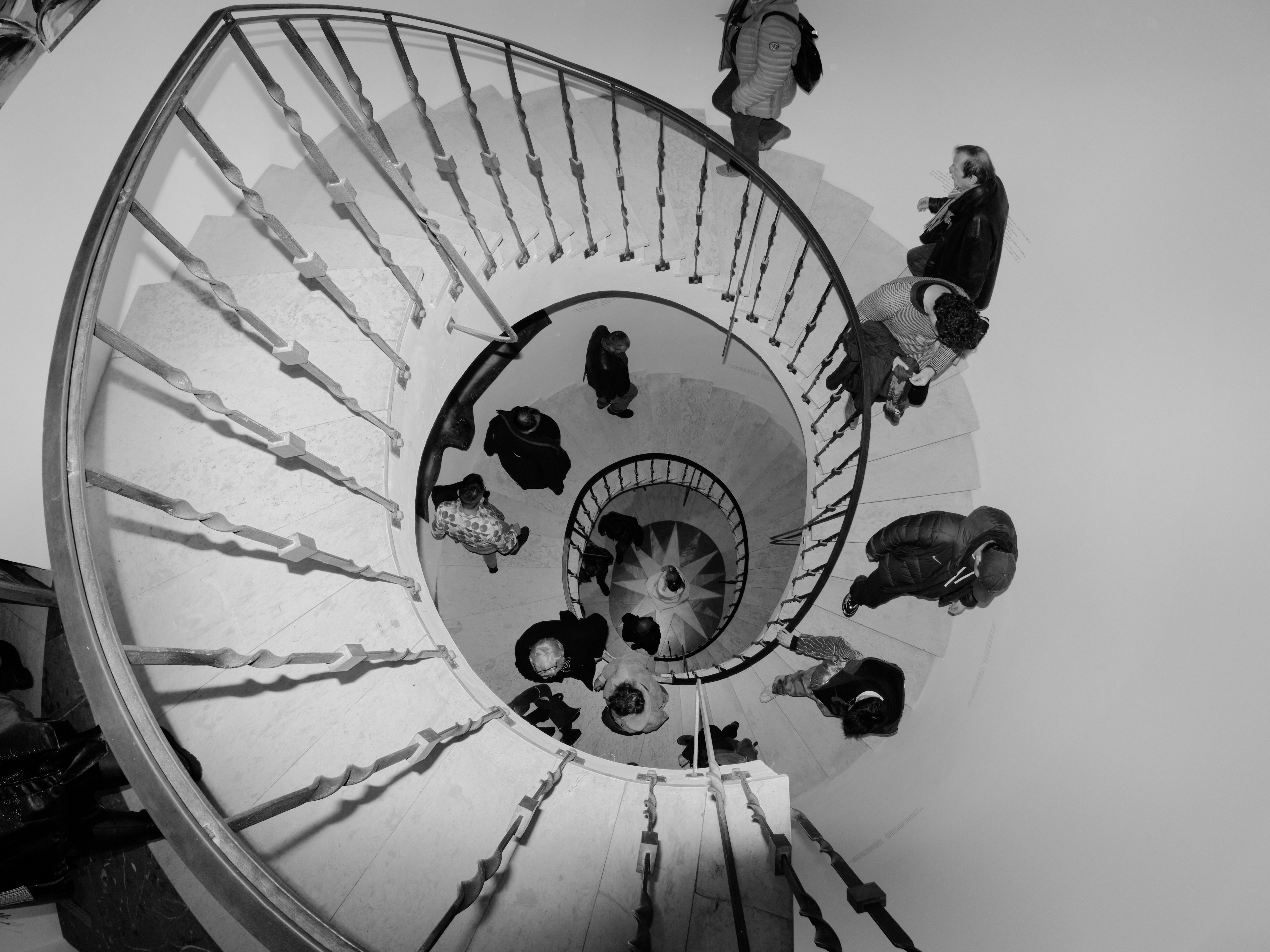
Exhibition Programme of Prague City Gallery for 2026
GHMP plans its long-term exhibition programme with an emphasis on thematic projects that reflect current interpretations of art history. These include, for example, upcoming monographic exhibitions of Jaroslav Čermák and Milada Schmidtová, as well as a project focusing on the art of the 1990s and the activities of the Bezhlavý jezdec (Headless Horseman) group.
In addition, we continue to map the contemporary scene, which has been a defining feature of GHMP since the early 1990s. Its transformations will remain one of the mainstays of our exhibition programme. We also continue to develop the project focused on Troja Château, which we have summarised under the title Labyrinth due to its complex nature. We perceive the entire location and the individual entities operating within it as opportunities for projects involving the themes of participation, sustainability and historical heritage. We aim to maximise and interconnect the potential of the entire valley with its cultural and natural assets. The most demanding exhibition project will be the aforementioned exhibition of the legendary painter Jaroslav Čermák which, through a rich collection of works from various local and international collections, will present both enduring and newly relevant themes, such as the relationship to the Orient (i.e., to otherness), the depiction of women as heroines or passive victims, and questions concerning the development of the art market, among others.
The aim of GHMP's year-round exhibition programme and accompanying activities is to create an interconnected whole that will present not only key themes in contemporary art, but also historically neglected or emerging artists. Equally important is the care of public spaces in Prague, of which GHMP is the curator. We are constantly improving our services for the widest possible audience, as well as special communities, their education and their leisure time spent in our exhibitions and education centres. After many years of effort to build a state-of-the-art depository, GHMP will finally see the opening of the Bouchalka complex, scheduled for completion in the first quarter of 2026. Over the coming months, our collections will finally move from various temporary locations to a respectable environment that meets the latest standards in terms of professionalism and security.
"GHMP's programme for 2026 confirms the gallery's long-term ambition to build on professionally strong projects that also appeal to a wide audience. Our goal is to present exhibitions that offer new perspectives on contemporary and historical art, are based on high-quality curatorial research and have the potential to open a dialogue with visitors across generations. We strive to ensure that GHMP remains an institution that combines professional integrity with openness and accessibility," says Helena Musilová, chief curator of GHMP.
"GHMP's exhibition plan for 2026 shows the importance of the gallery's role in the cultural life of Prague. It presents projects that not only introduce important figures and themes in art but also openly respond to issues that resonate with society today. I also greatly appreciate the gallery's long-term efforts to work with public space and make art accessible to the widest possible audience," adds Prague's Deputy Mayor for Culture, Tourism, Heritage, National Minorities, Exhibitions Sector and Animal Welfare JUDr. Jiří Pospíšil.
GHMP exhibitions in 2026
Dates: 29 April – 30 August 2026
Curator: Magdalena Juříková
Graphic design: Studio Anymade
Architectural design: Magdalena Juříková and GHMP’s Exhibition Production Department
The exhibition presents a selection of acquisitions made by the Prague City Gallery over the last fourteen years – a period during which Magdalena Juříková has led the institution. The aim is not only to recapitulate the institution's purchasing strategy but also to reflect on the changes in the contemporary art scene as monitored by GHMP over the long term. The working title 350 of 2171 refers, in the first instance, to the number of works that can be approximately accommodated in GHMP Knihovna and in the second instance to the total number of works acquired for the collections during Magdalena Juříková's tenure. The works on display cover a wide range of media – from painting, drawing and sculpture to photography, video, spatial installations and conceptual art. In addition to established artists of several generations, the exhibition also provides space to emerging artists. The selection of works demonstrates the diversity of approaches, forms and themes that contemporary artists reflect upon. At the same time, the exhibition raises questions about the collection strategies of public institutions in a changing cultural context.
A related publication will also come out in 2026 in collaboration with the international publishing house Kulturalis. The book will present a selection of key works that have expanded GHMP collection under her leadership. It will offer not only an overview of newly acquired works of art, but also a reflection on curatorial strategies, changes in collection policy and broader cultural and political contexts. The publication will thus serve as both a summary of an important period in the gallery's history and a personal view of the formation of its current identity.
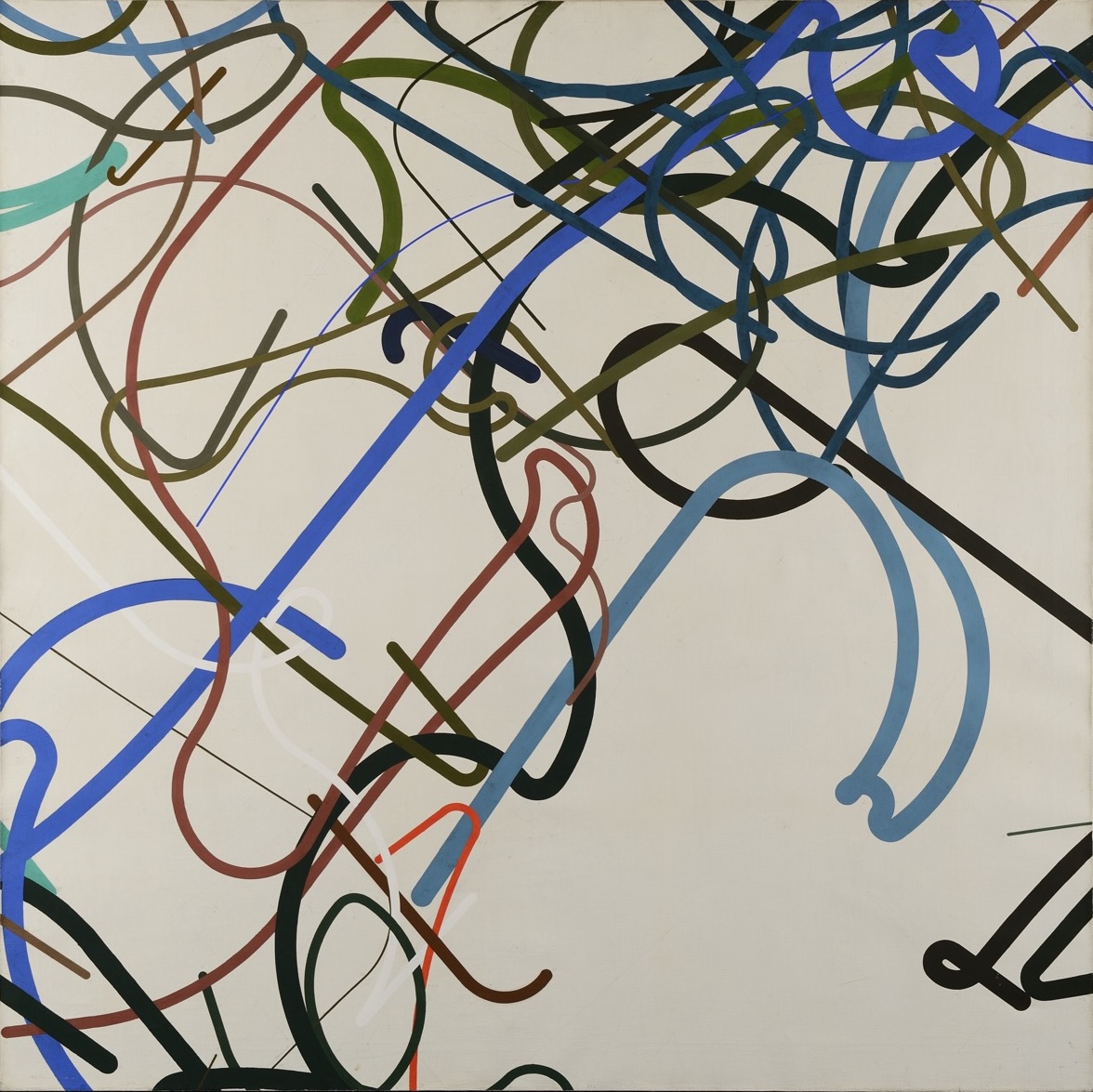
Sýkora Zdeněk, Linie č.39, 1986
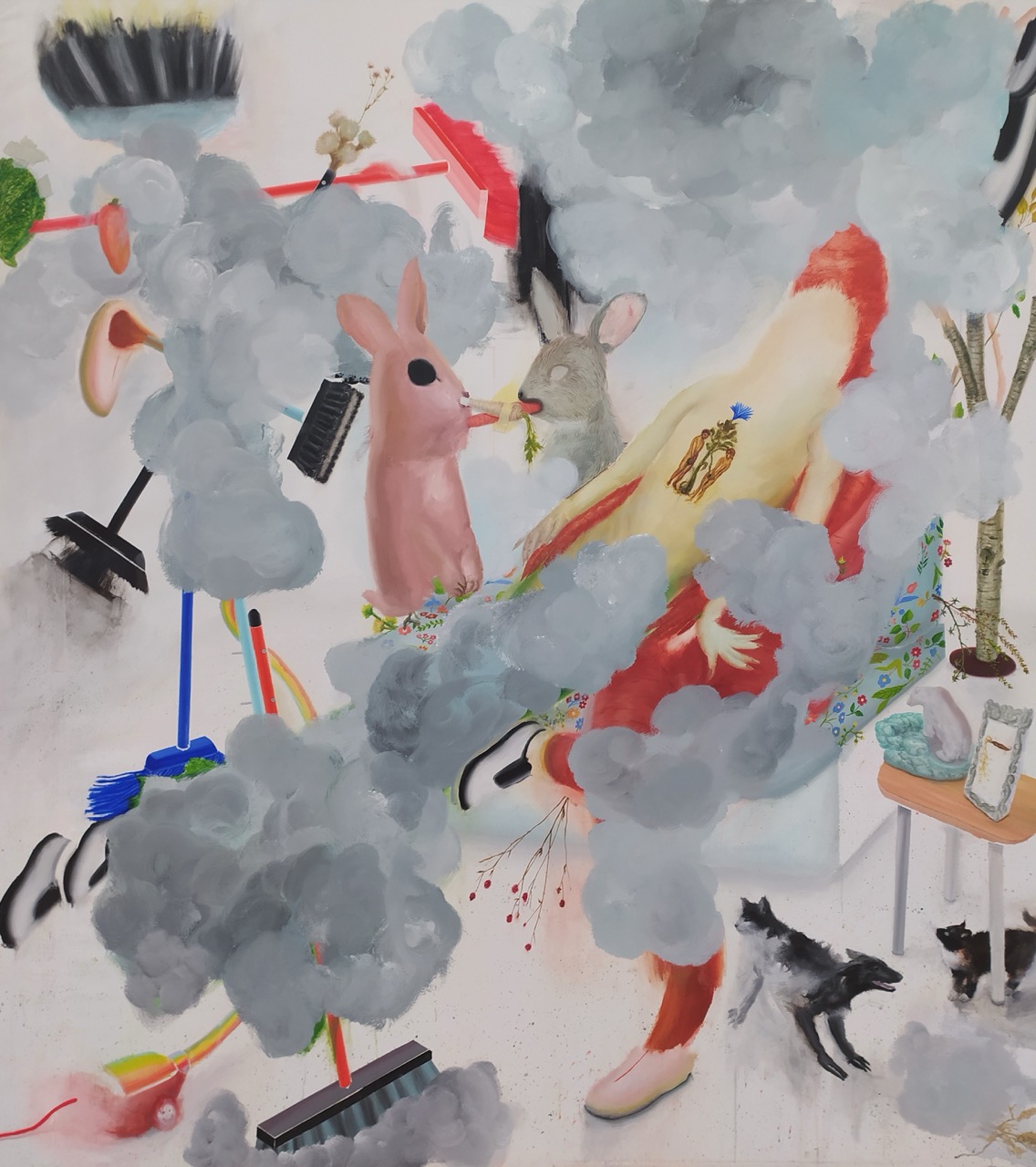
Petrbok Jiří, Na počátku byla mrkev, 2019-20
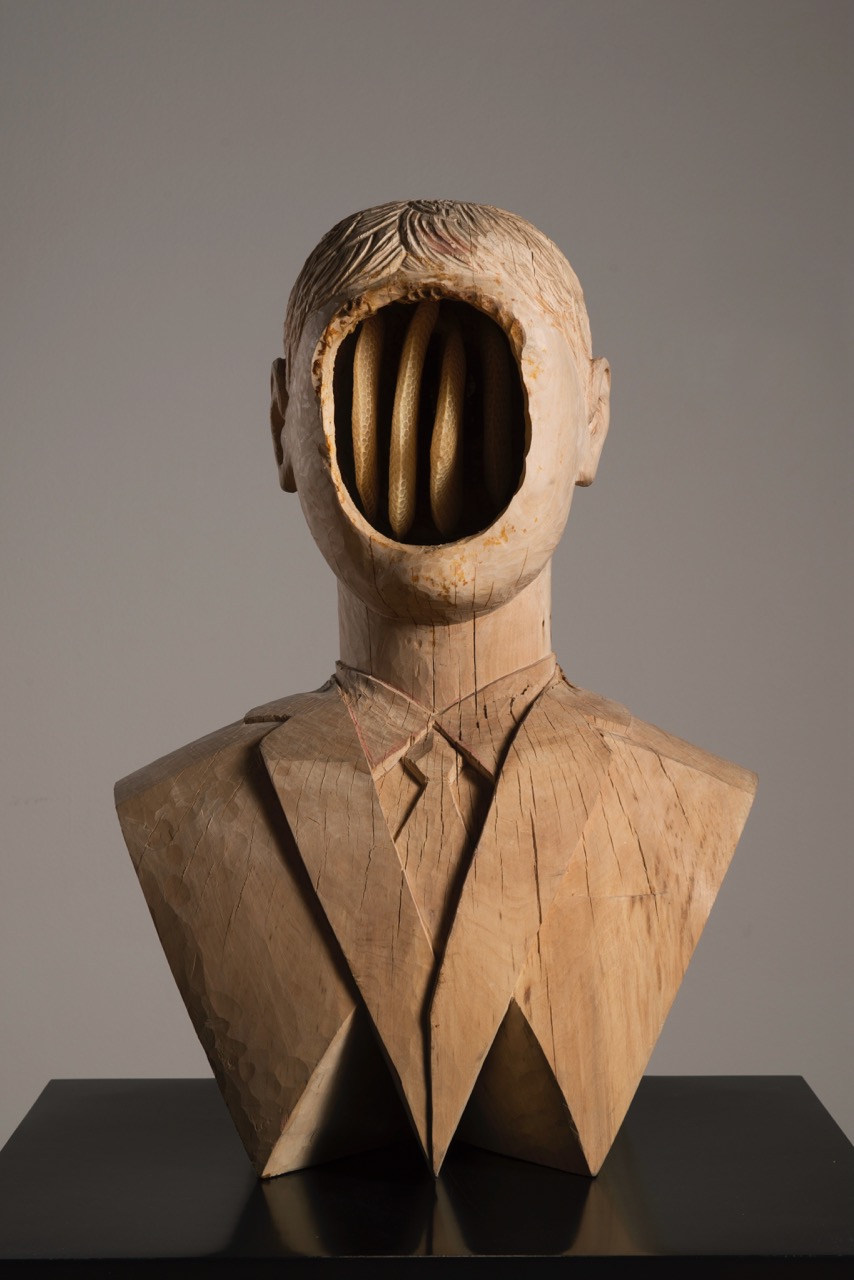
Hulačová Anna, Kult osobnosti, 2016
Photos in print quality are available here
Dates: 4 November 2026 – 28 February 2027
Team of authors and curators: Markéta Theinhardt, Viera Borozan, Kristýna Hochmuth, Šárka Leubnerová, Vít Vlnas and Markéta Vondrová
Coordination: Dana Haltufová, Helena Musilová
Graphic design: Jan Havel
Architectural design: Tomáš Svoboda
The exhibition will be organised in cooperation with the National Gallery Prague and will be held under the auspices of Mr. Jakov Milatović, President of Montenegro.
Prague City Gallery is preparing a special exhibition of Jaroslav Čermák, which, after more than a hundred years, will present the work of this important painter in its entirety and in a truly European context. Čermák (1830–1878) was one of the most talented artists of his generation, who managed to connect the Czech experience with the international art world of the mid-19th century. He exhibited at the Paris Salons de la Société des Artistes Français, won awards in Belgium and France and his paintings found their way into collections throughout Europe.
The exhibition at the Library traces Čermák's journey from Prague via Brussels and Paris to the Balkans and Brittany. It shows a painter who was able to use historical themes to reflect the political tensions of his time – ideals of freedom, national self-determination, and dramatic clashes of civilizations. Čermák's work stands out for its exceptional painterly quality, psychological depth and strong sense of dramatic composition, which have earned him comparisons to the greatest masters of European historical painting.
The exhibition, prepared in collaboration with the National Gallery Prague and an external team of researchers, will present loans from the Musées royaux des Beaux-Arts de Belgique, KMSKA in Antwerp, Musée de la Vie romantique in Paris, Amsterdam Museum, Dahesh Museum of Art in New York and the National Gallery Prague. After more than one hundred and fifty years, the famous painting The Abduction of a Herzegovinian Woman, with which Čermák shone at the Paris Salon in 1861, will return to Prague.
In addition to Jaroslav Čermák's key works, the exhibition will also feature works by his contemporaries and followers to show how intensively 19th-century Czech art was engaged in the European dialogue. Čermák's "return to Europe" is thus not only the discovery of a nearly forgotten genius, but also an eloquent probe into a time when modern art was being born between Paris, Prague and the Balkans.
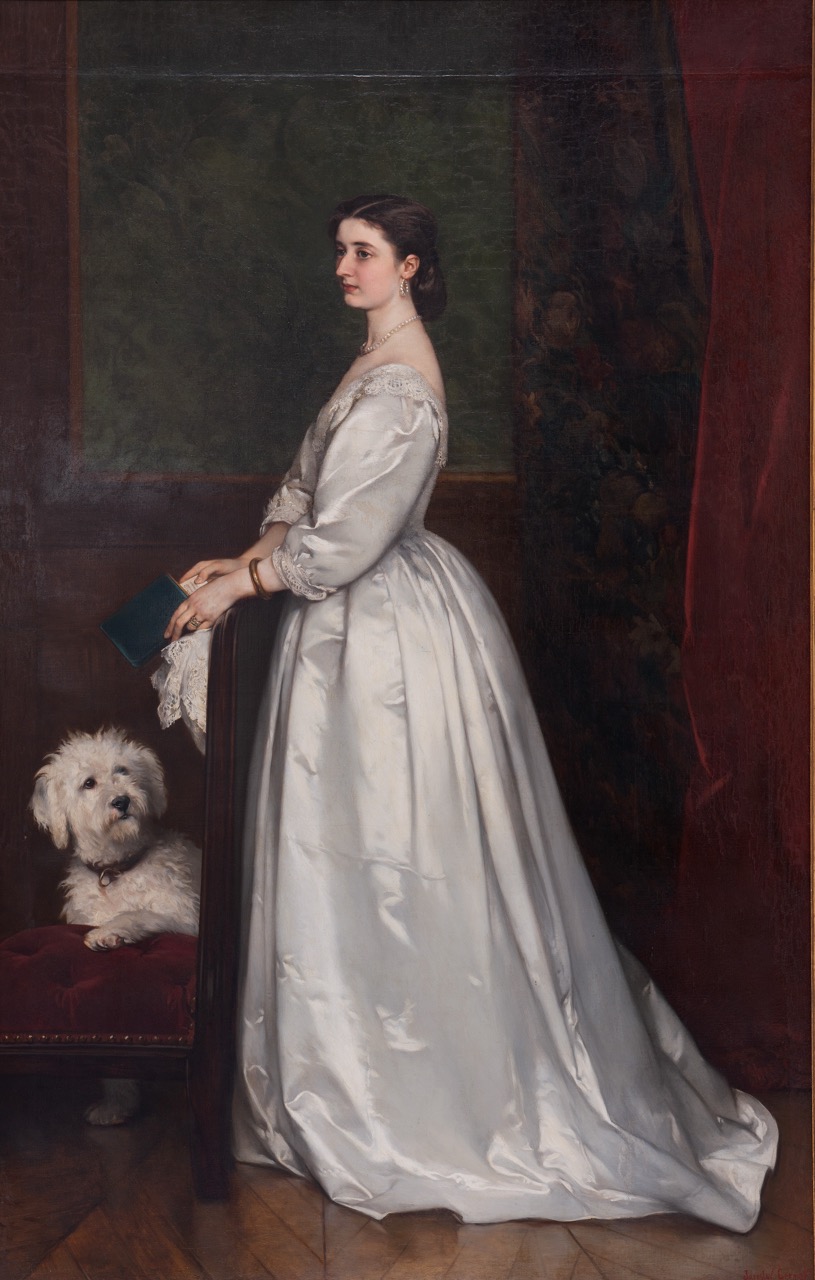
Čermák Jaroslav, Podobizna paní Gallaitové, 1863
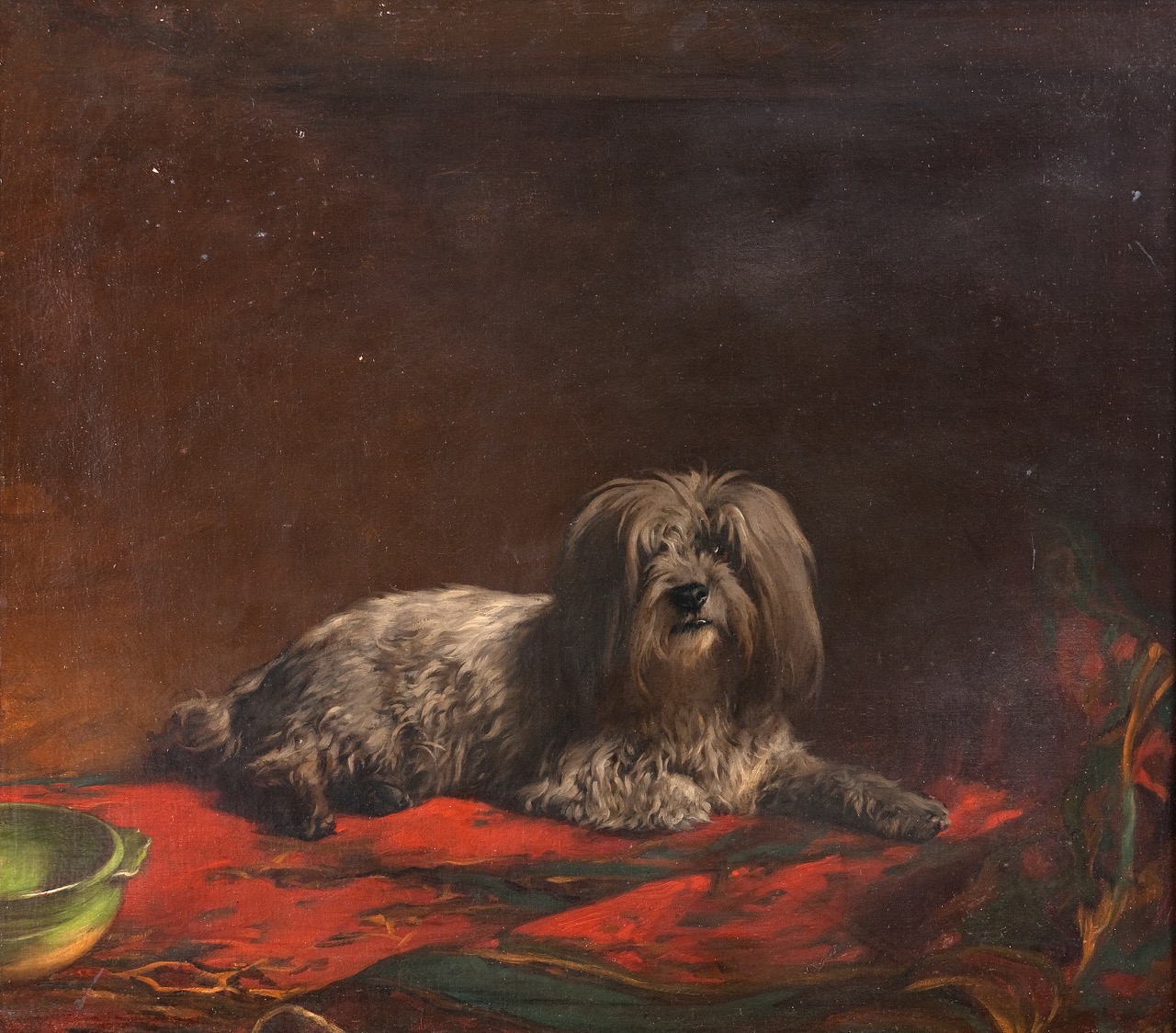
Čermák Jaroslav, Pes/Lev, 1863 až 1864
Photos in print quality are available here
Dates: 24 June – 11 October 2026
Curators: Vít Havránek, Sandra Baborovská
Graphic design: Lukáš Kijonka
Architectural design: Vít Havránek
The Bezhlavý jezdec (Headless Horseman) group was formed in 1996, a symptom of the times and the result of a unique encounter of four individuals with distinct personal and artistic qualities. Four young students of the Academy of Fine Arts (Josef Bolf, Ján Mančuška, Jan Šerých and Tomáš Vaněk) entered an art scene, which was much smaller and more concentrated than today's, but also more clearly structured by art criticism, journalism and theory. The members of the group were united by a deep interest in avant-garde, neo-avant-garde and contemporary subcultural literature and art, which clashed with the one-dimensional language of advertising, pop culture and spectacle. However, numerous discussions revealed that a common declaratory position not only could not be found without adjustments and compromises, but that no one actually felt it was necessary.
Thirty years on, the exhibition asks: has the liberal diversity of the 1990s become a strange, missing utopia? Especially today, when society is divided, fragmented, exhausted by the financial crisis, the COVID-19 pandemic and constant clashes between opinion groups on social media? This is not about idealising the 1990s, but about re-performing a certain ideal of cultural liberalism that both the left and the right have lost interest in nurturing today.
The accompanying publication maps the activities of the art group between 1996 and 2002 through archival materials, photographs and documentation. It includes expert texts by Vít Havránek and other authors devoted to the group's activities and exhibition history. The second part offers selected contributions from the symposium reflecting the broader Czech and international cultural context of the time. The publication will be released in late 2026 by NAVU Publishing House in collaboration with GHMP.
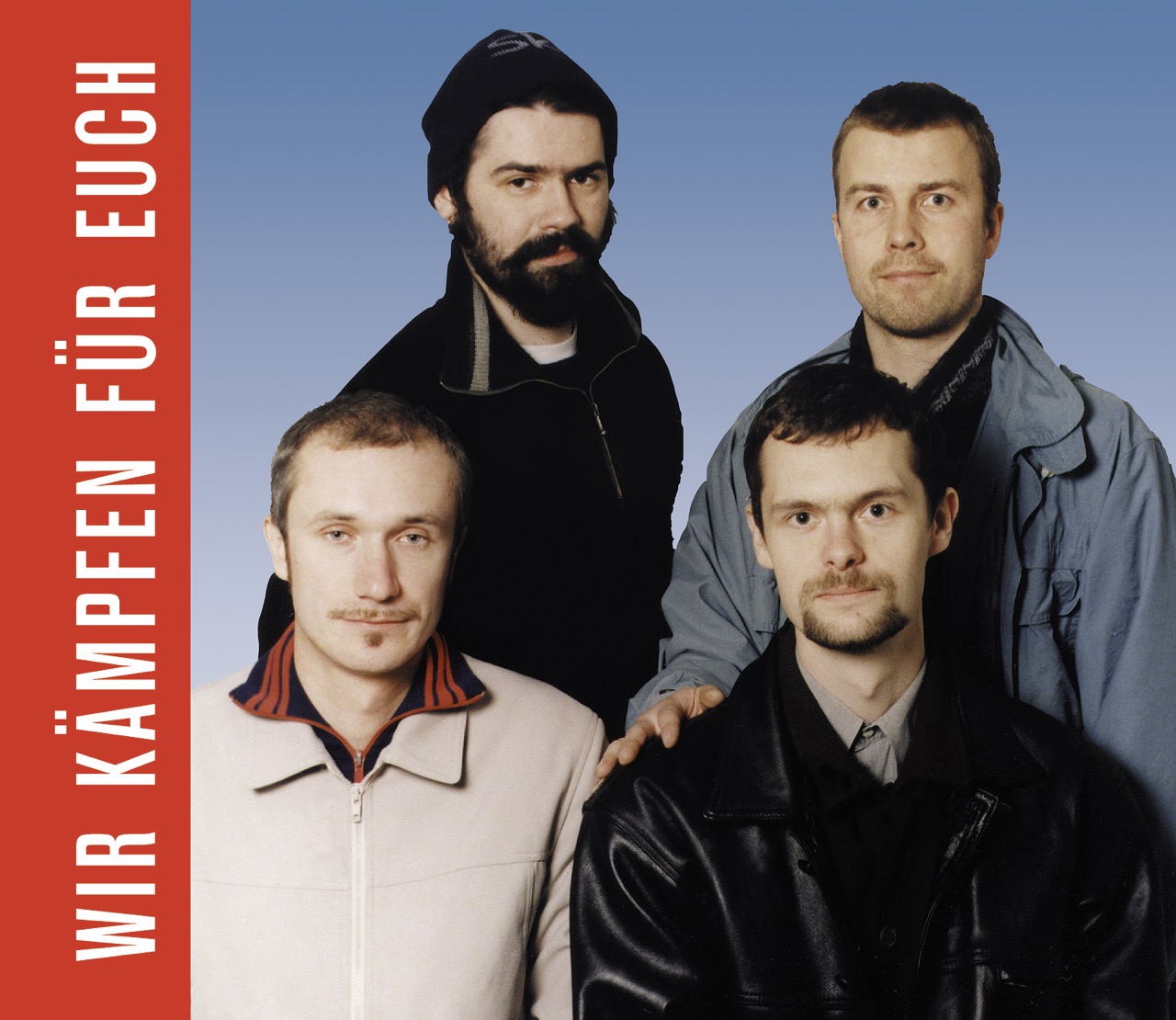
from the left Josef Bolf, Ján Mančuška, Jan Šerých, Tomáš Vaněk, Wir kämpfen für euch (Pereme se za vás), Plakát vytvořený pro Vitrínu skupiny na ulici Komunardů v Holešovicích, 1998
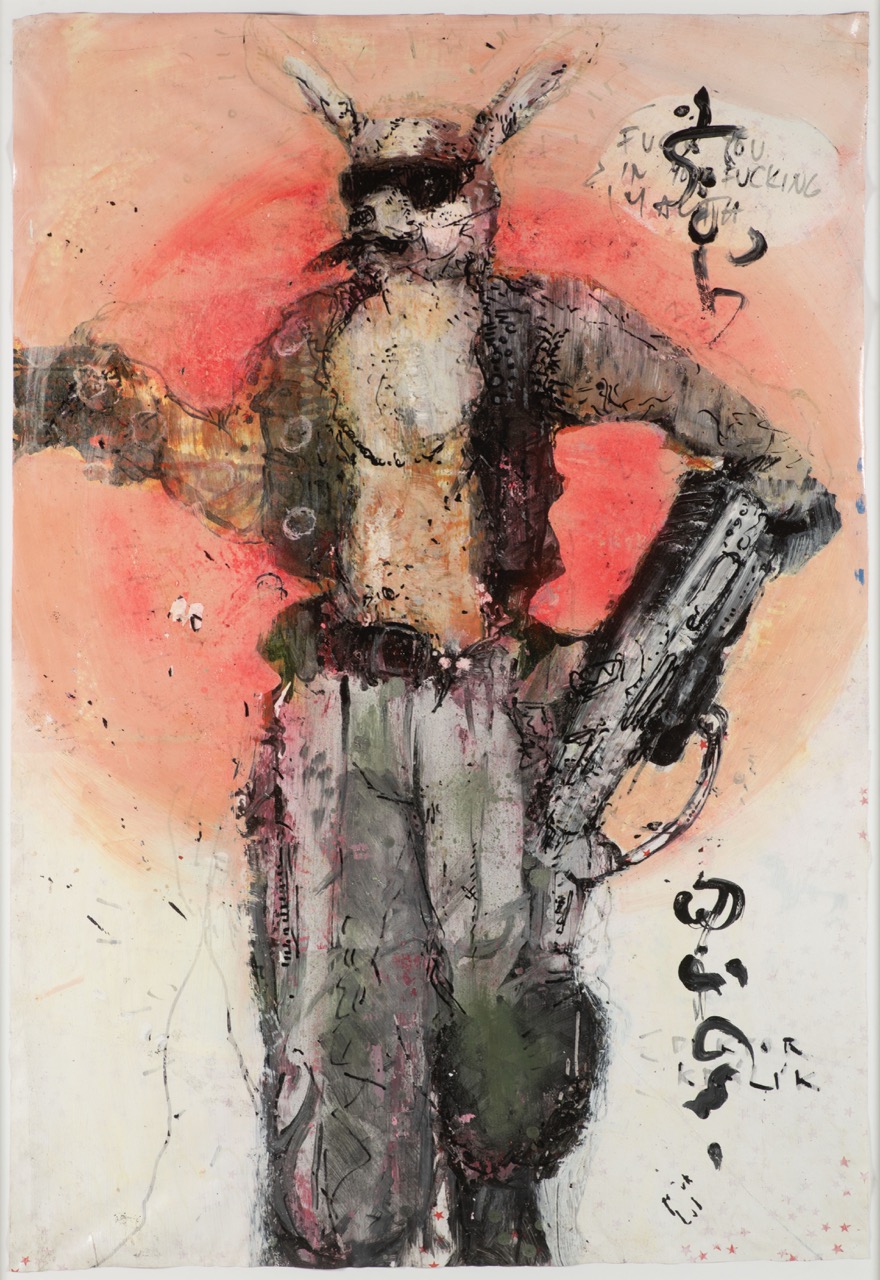
Josef Bolf, Yakamoto, 1999, GHMP
Photos in print quality are available here
Dates: 3 December 2026 – 8 March 2027
Curator: Helena Musilová
Graphic design: Jan Zachariáš
Architectural design: Marek Cpin
Milada Schmidtová (1922–2015) is one of the most authentic painters of Central European art of the second half of the 20th century. Her work was virtually unknown during her lifetime and only in recent years has it begun to be re-evaluated and placed in both domestic and international contexts. She reflected on a number of themes, approaches and feelings that remain relevant today – war anxiety, the existential feelings of a person excluded from the community, creative obsession and reconciliation in the landscape...
As a young woman, Schmidtová was part of a circle of artists at the Zlín School of Art and created the seminal War Cycle, a Surrealist series of drawings reflecting on war and personal tragedy – the death of her friend Václav Chad. In 1946, she exhibited it in Prague and took it to Paris, where, however, only the paintings of her mother, the naive painter Natálie Schmidtová, attracted interest. She herself was then completely overlooked and withdrew to the Bohemian-Moravian Highlands. She made a living as a beekeeper, painting portraits, landscapes and distinctive series of Heads and Figures which, however, remained unseen. She did not title or date most of her work and it was rumoured that she destroyed much of it. She suffered from mental health problems and lived a lonely life.
Her first small solo exhibitions did not take place until 2013–2017. According to experts (Alena Pomajzlová, Ladislav Daněk, David Voda), her work is one of the most significant and surprising contributions to Czech post-war art.
The accompanying publication will present a comprehensive overview of Milada Schmidtová's work. It will offer a systematic, critically conceived evaluation of her work in the broader context of Czech post-war art and Central European new figuration, including previously unpublished drawings, literary texts and other related material.
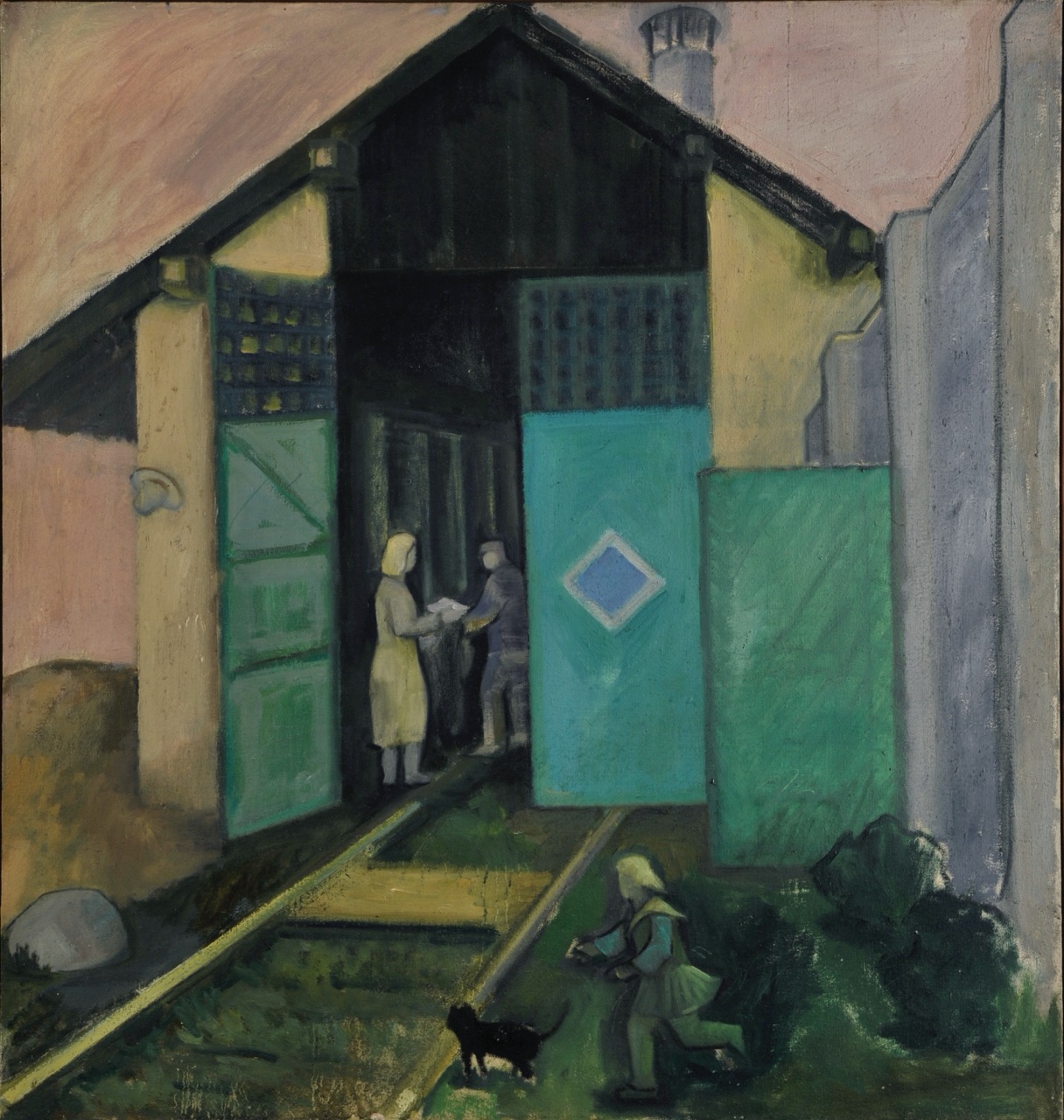
Milada Schmidtová, Z cyklu Nádraží (Bystřice nad Pernštejnem), 60. léta
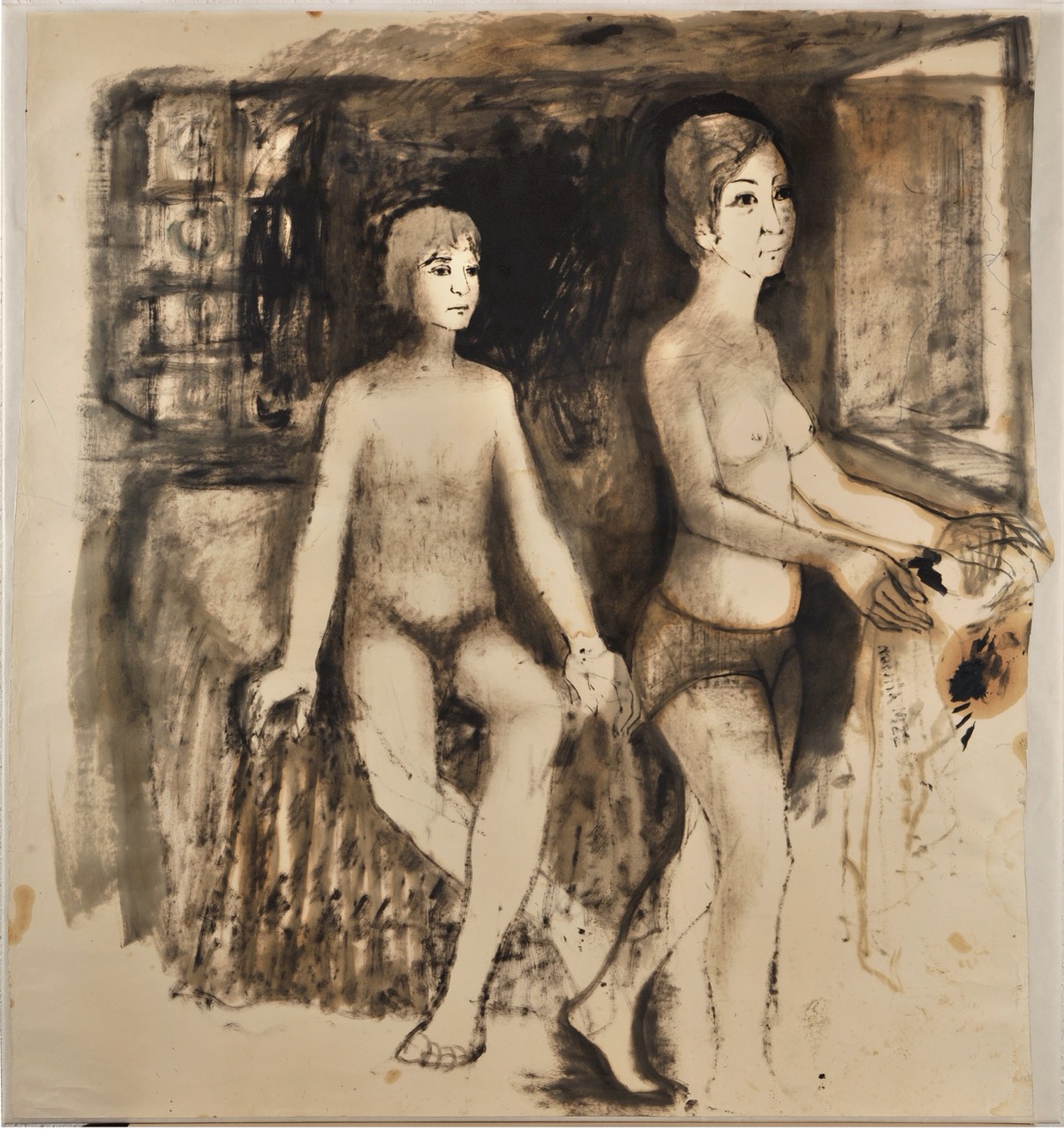
Milada Schmidtová, Rodina Schmidtova, 1980
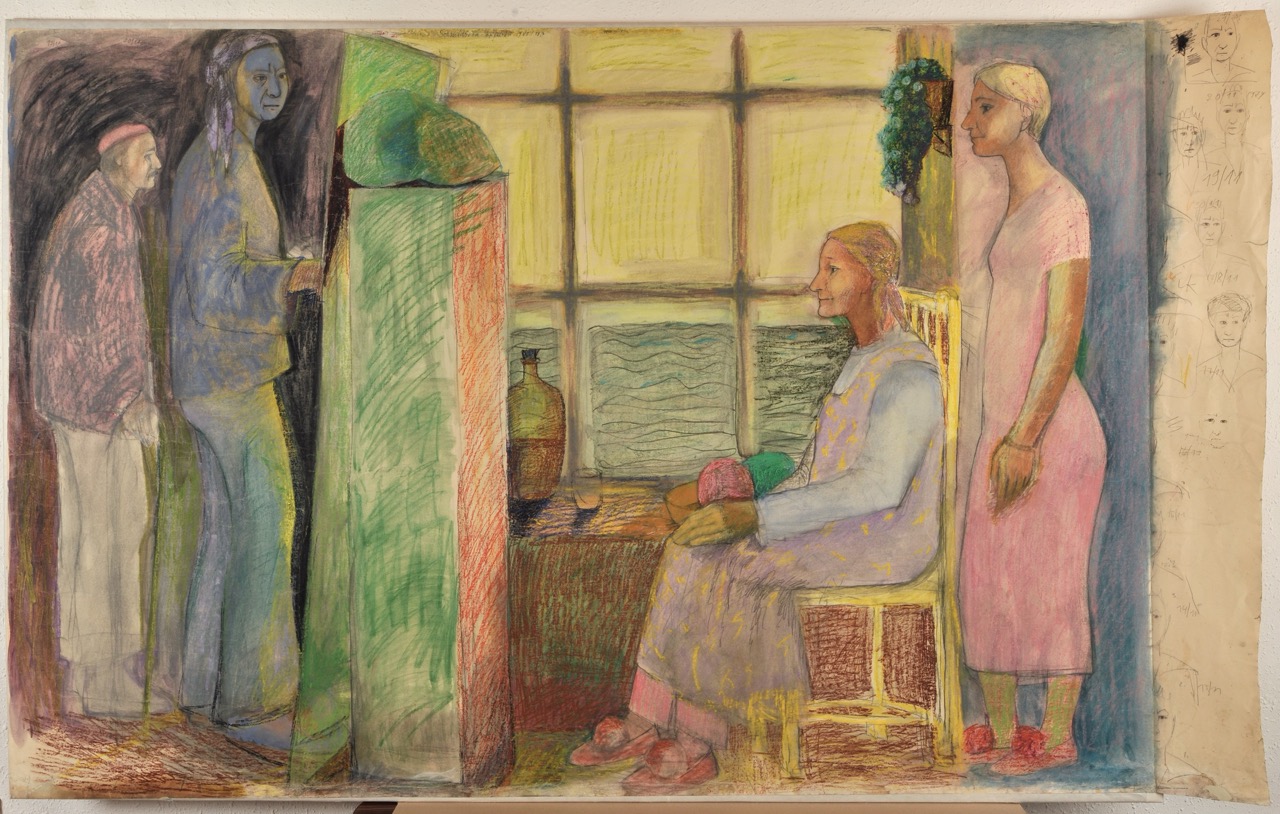
Dvojice (autoportrét), 1. polovina 60. let 20. století
Photos in print quality are available here
Dates: 3 February – 29 March 2026
Curatorial team: Alexandra Kusá, Branislav Matis, Nina Vidovencová in collaboration with Slobodná úderka (free shock brigade)
Curatorial collaboration for GHMP: Helena Musilová
Graphic and architectural design: Brano Matis
After the 2023 elections, the new government appointed a nominee from the Slovak National Party to head the Ministry of Culture and the controlled destruction of cultural institutions began. The new cultural policy was not ideological but personnel-based and aimed against professionalism. What followed was beyond what we could have imagined: bans, cancellations of exhibitions and projects, unfavourable contracts and, above all, total amateurism. The gallery staff stood up in creative, civic and professional resistance, which culminated in their mass resignation. More than a hundred employees voluntarily left the jobs they loved because they could not do their work properly under the appointed directors – four of whom came and went during one year. From the summer of 2024 until the mass departure in April 2025, we experienced a most remarkable period, when various forms of creative resistance and opposition were devised in the struggle against amateurism. It is precisely the reflection on these events and their ever-growing repercussions that forms the theme and content of the contextual, museological exhibition at GHMP. The installation will be divided into two parts: on one floor we will reflect on key events through documents, videos, commentaries and photographs; on the second floor, we will present creative forms of resistance. The events at the SNG sparked a wave of solidarity and became part of the protests of the Open Culture and Art Will Not Be Silent initiatives. The exhibition will also include works of art that were part of this project, small pop-up box exhibitions by artists such as Roman Ondák, Ilona Németh, Jiří Franta and David Böhm, Matúš Maťátko and others. The project is neither an activist nor a documentary exhibition, although it uses both approaches. A new genre is emerging – a living artistic environment as a "description of a struggle", which contributes to the context of the political history of art and the expansion of the field of art history and exhibition.
The exhibition reflects the principles to which Prague City Gallery has long been committed. Through artistic projects and visual interventions, the gallery wishes to enable the articulation of clear positions on current social and political issues, encourage critical thinking among visitors and show that art can be a means of reflection, dialogue and active engagement in public affairs.
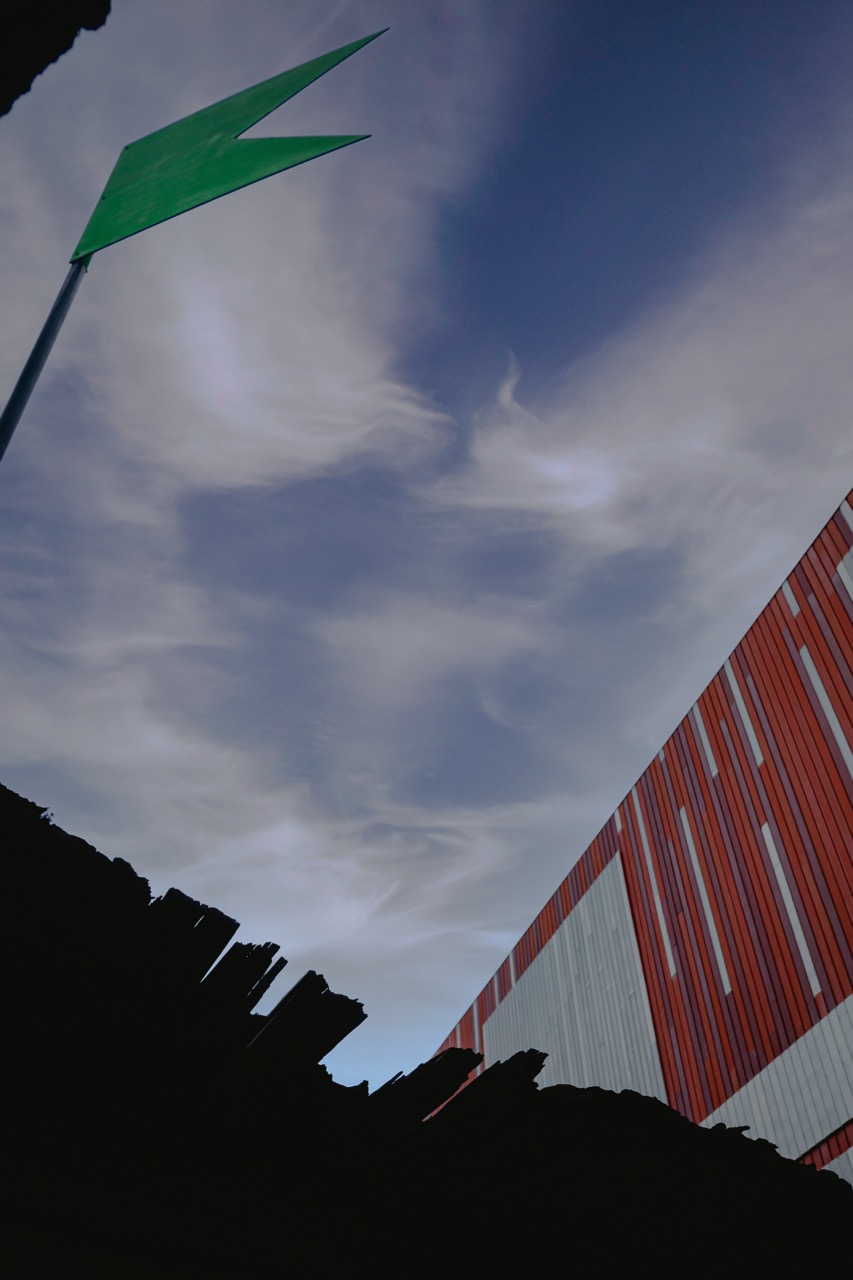
Slobodná národná galéria, Site specific s vlajkou Braňa Matise v instalační spolupráci Gustáva Vidu. Garáže při SNG. 2025 (mimo institucionální odboj)
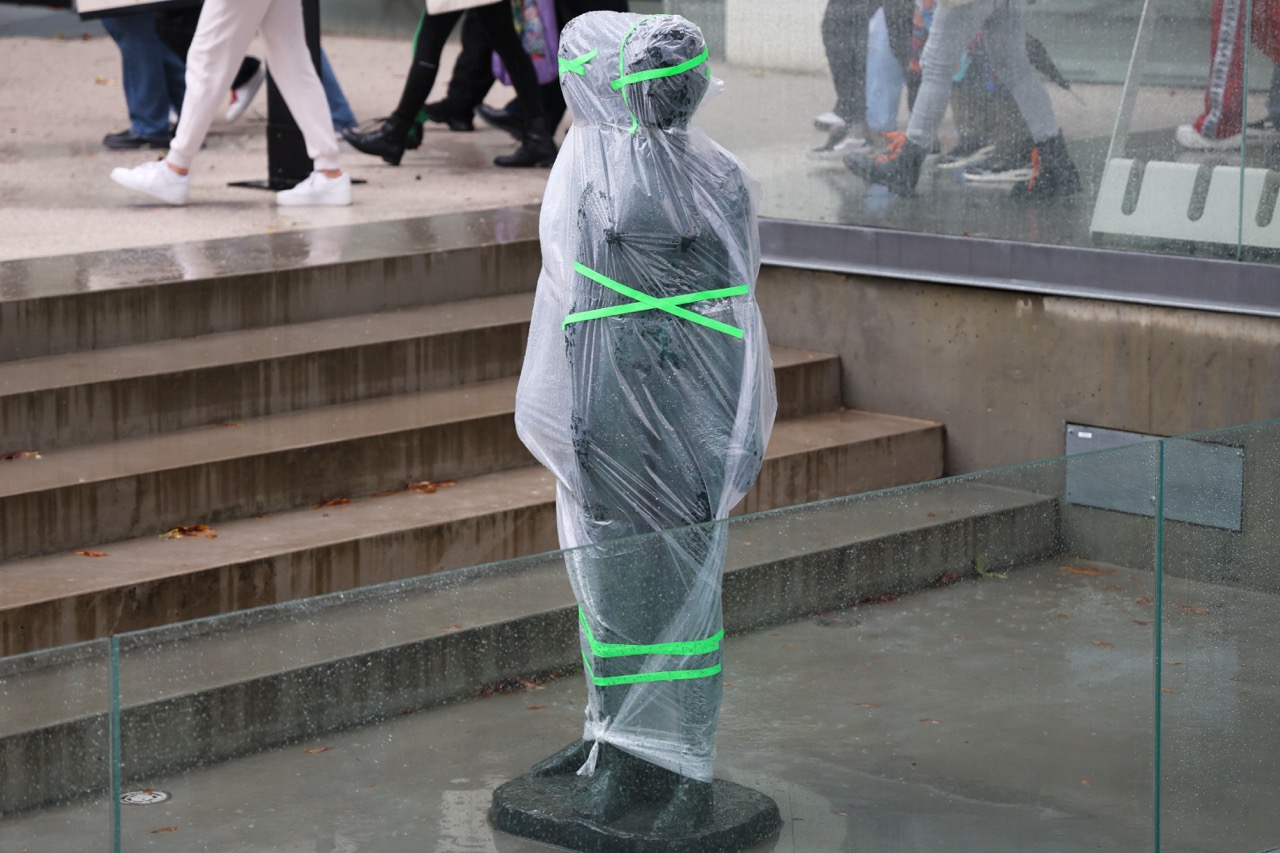
Slobodná národná galéria, Sloboda trvá. Cenzura propaganda a umění. Program k výročí Sametové revoluce. 2024 (institucionální odboj)
Photos in print quality are available here
Authors: Gabriela Bulisová, Mark Isaac
Dates: 12 May – 16 August 2026
Curator for GHMP: Karla Hlaváčková
Graphic design: Pavel Tichoň Architectural design: Pavel Mrkus
The Second Fire is an authorial perspective of Lake Baikal in Siberia, the oldest, deepest and largest lake in the world, which contains more than 20% of the world's fresh water. Authors Gabriela Bulisová and Mark Isaac spent a year in eastern Siberia and created a multifaceted project that places special emphasis on the lake's environmental problems, including increasing pollution and rapid climate change. Through experimental photography, multi-channel videos and a uniquely designed photo book, they capture the vastness and majesty of the lake, intimate moments of its resilient inhabitants and the unique places and urgent dangers that threaten them.
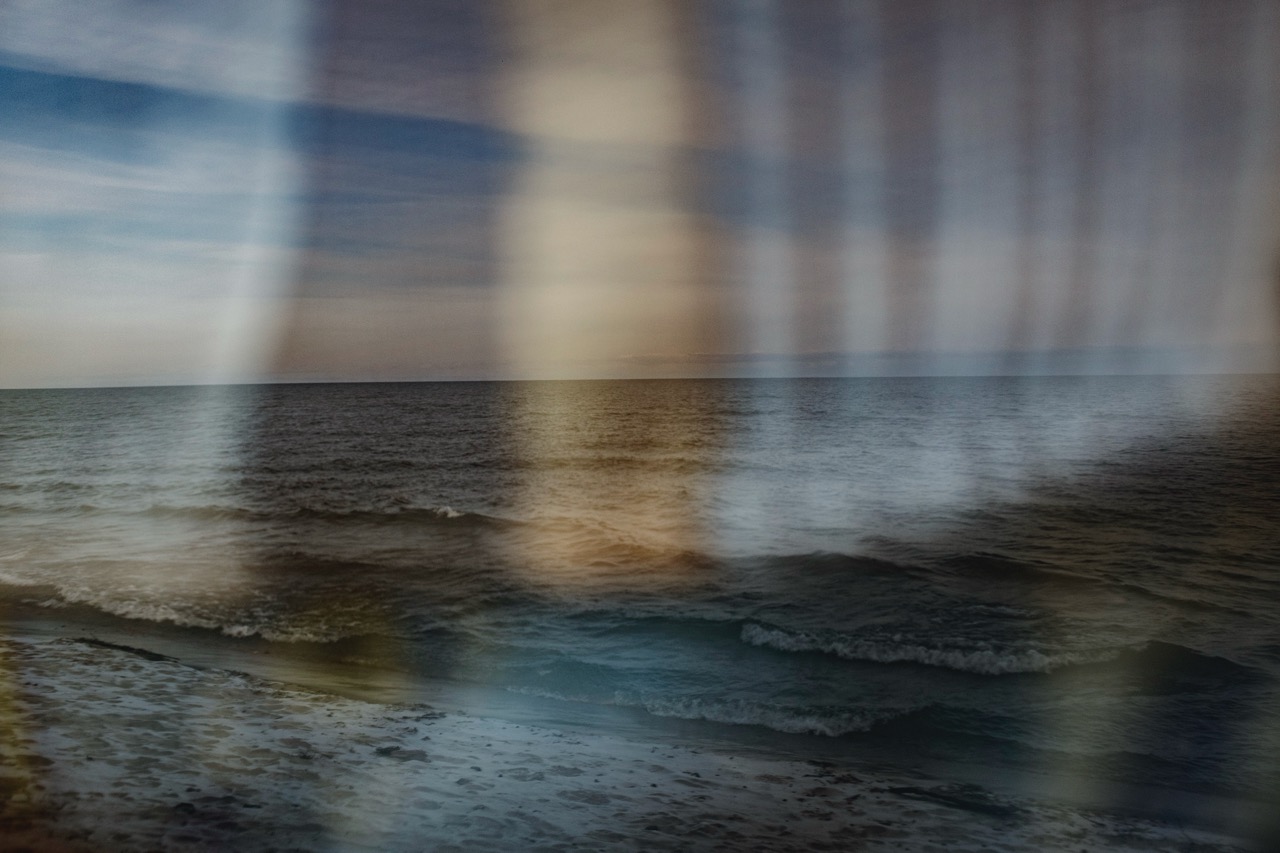
The Second Fire, Gabriela Bulišová a Mark Isaac
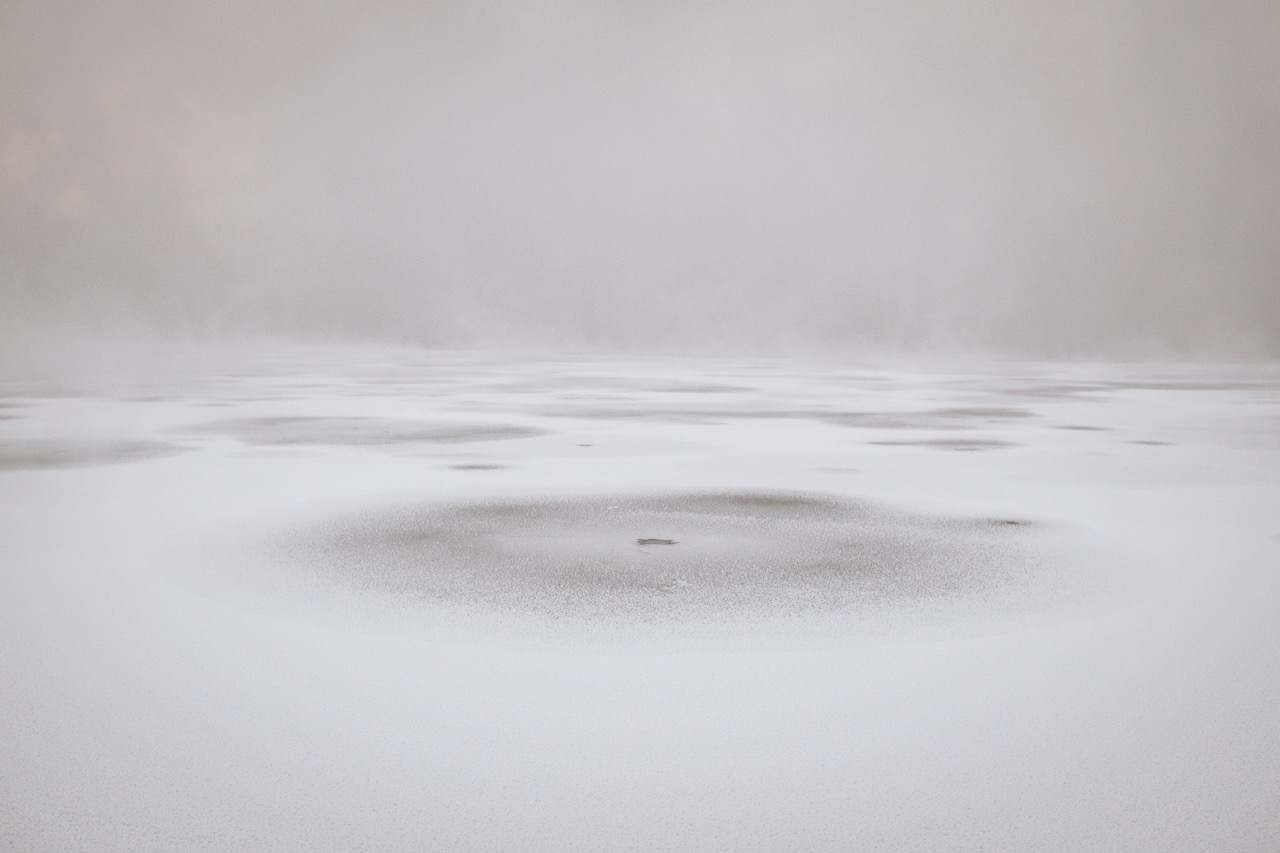
The Second Fire, Gabriela Bulišová a Mark Isaac
Photos in print quality are available here
Dates: 1 October 2026 – 3 January 2017
Curator: Martin Netočný
Graphic design: Kateřina Radakulan
Architectural design: Zuzana Burgrová
The Terra Incognita exhibition focuses on the historical role of the media sphere in the processes of territorialisation of nature. Through film, visual and intermedia projects, it will explore the relationship between imaging technologies and the ways in which they shape our understanding of the world around us. The first part of the exhibition will highlight the power and historical determinants that influence the ways in which we observe, while the second will present projects that transform the process of recording, storing and reading information into performative, spontaneous events. The exhibition traces how imaging technologies simultaneously enable and limit our perception of nature and how control intertwines with an element of elusive wildness.
The works of David Blandy, Harun Farocki, Sasha Litvinsteva, Alex Selmec, Tomáš Kocka Juska and Su Yu Hsin in the first chapter focus on the role of the observer and the technical limits of collecting and interpreting data about the landscape. The second chapter allows the materials themselves, minerals and elements contained in the devices, to "speak” through the works of Kryštof Brůha, Ioana Vreme Moser and Agustine Woodgate, who transform technology into a living, acting organism.
The exhibition will be complemented by an interdisciplinary conference organised by GHMP in collaboration with FAMU in January 2027. A subsequent professional publication will be produced in collaboration with the NAMU publishing house.
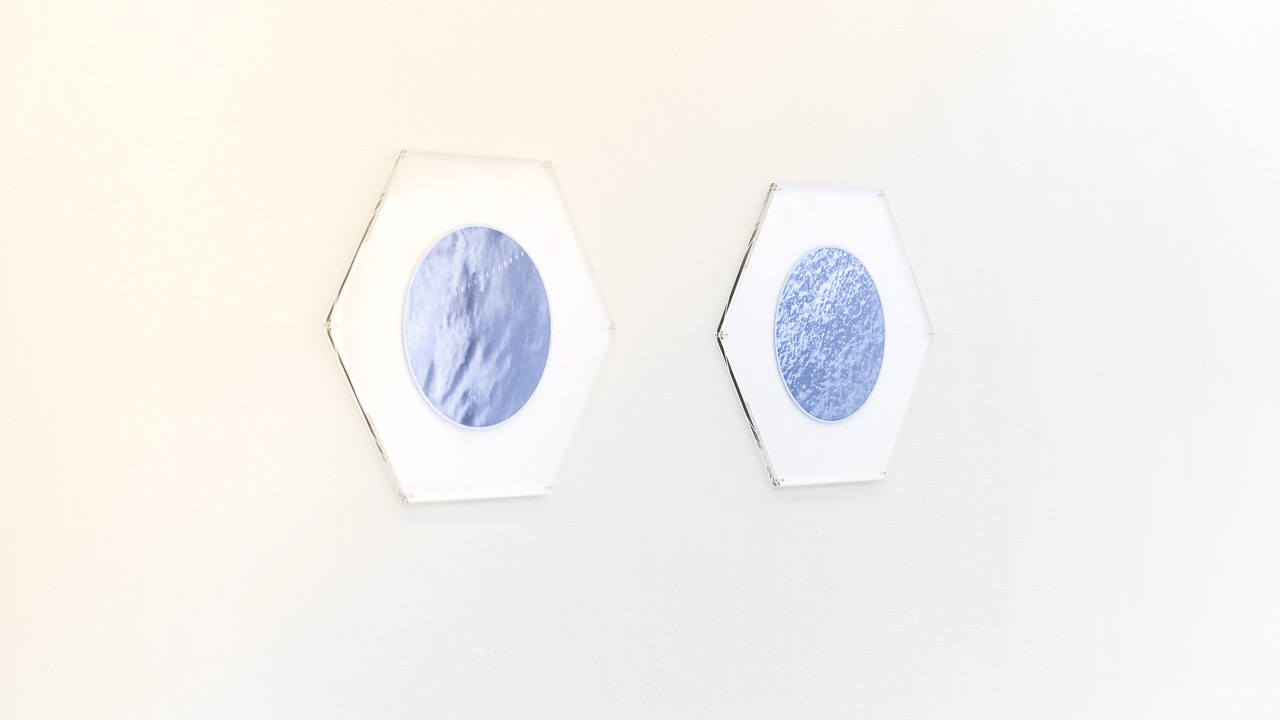
Su Yu Hsin, Particular Waters, © GRAYSC, 2023
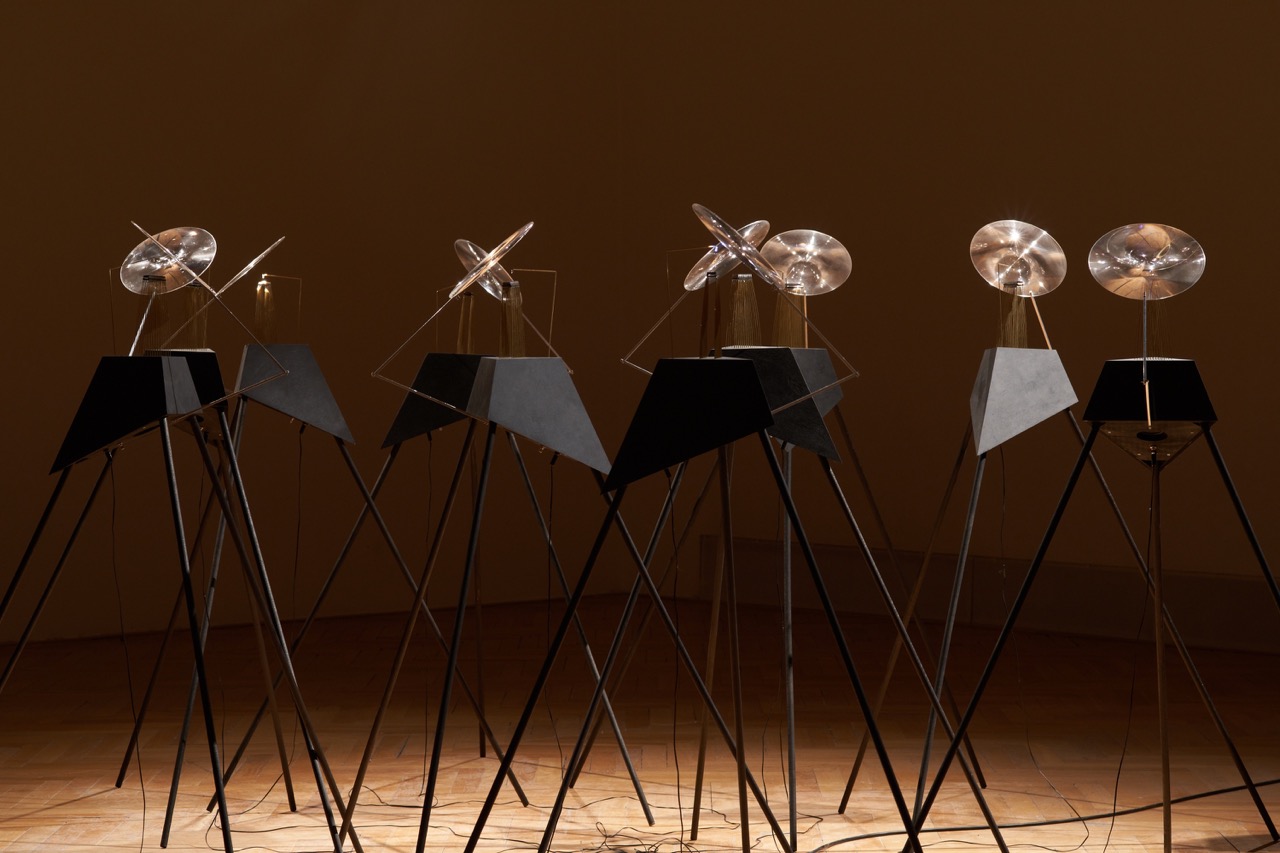
Ioana Vreme Moser, Mineral Amnesia, © Polina Davydenko, 2023
Photos in print quality are available here
Dates: May 2024 – 31 December 2026
Curator: Hana Larvová
His sculptures, drawings, prints, artist’s books and texts from that time convey Bílek’s unique interpretation of Christianity, rooted in a mystical world of symbols and allegories. Central to understanding Bílek’s spirituality are two of his seminal artist’s books from this period: Building the Future Temple in Us (1908) and The Journey (1909). The resulting intricate mosaic of religious syncretism, which became the backbone of Bílek's entire work, was most authentically expressed during this time.
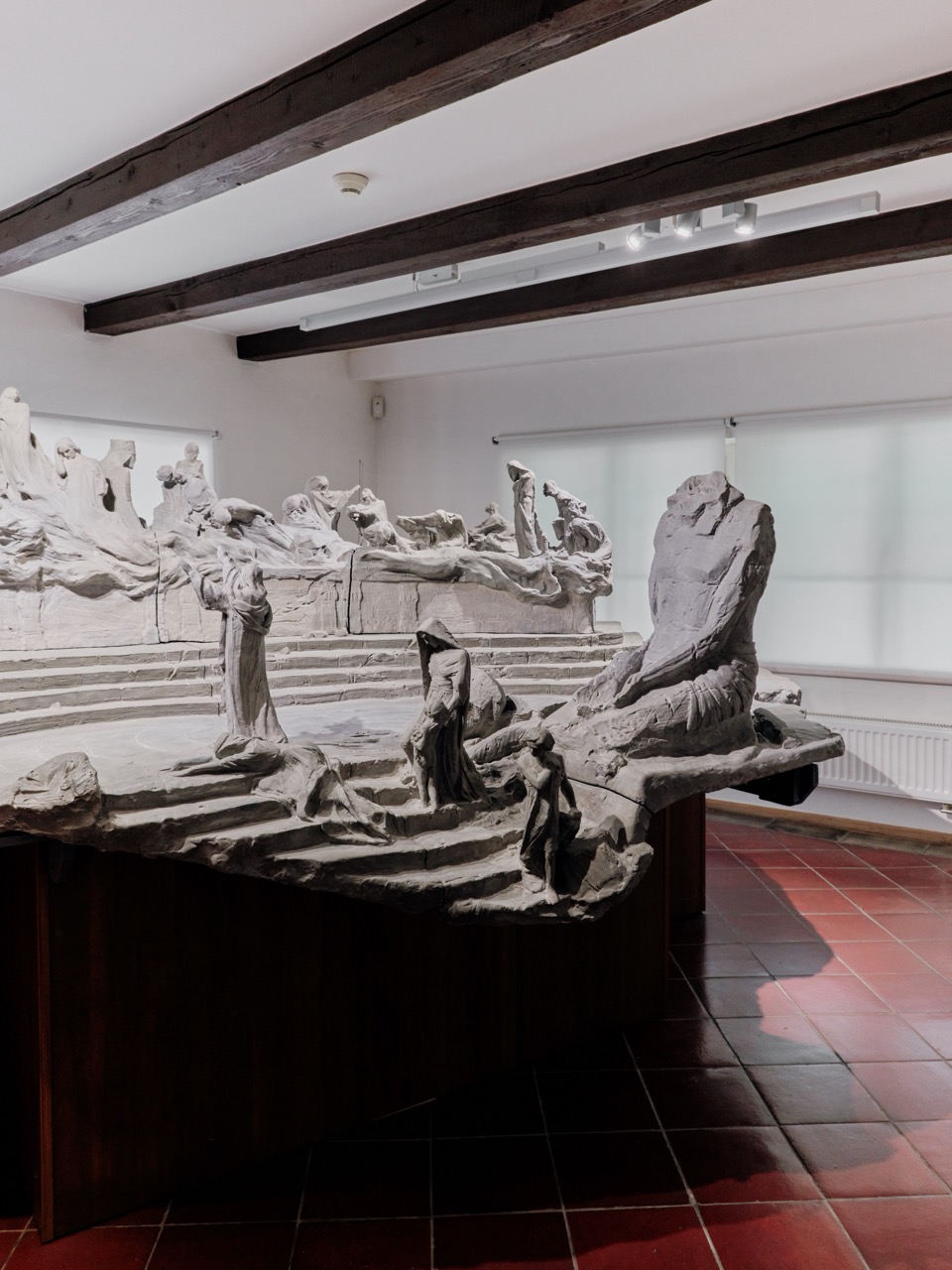
František Bílek, Entrance to the Temple Vestibule © Eda Babák
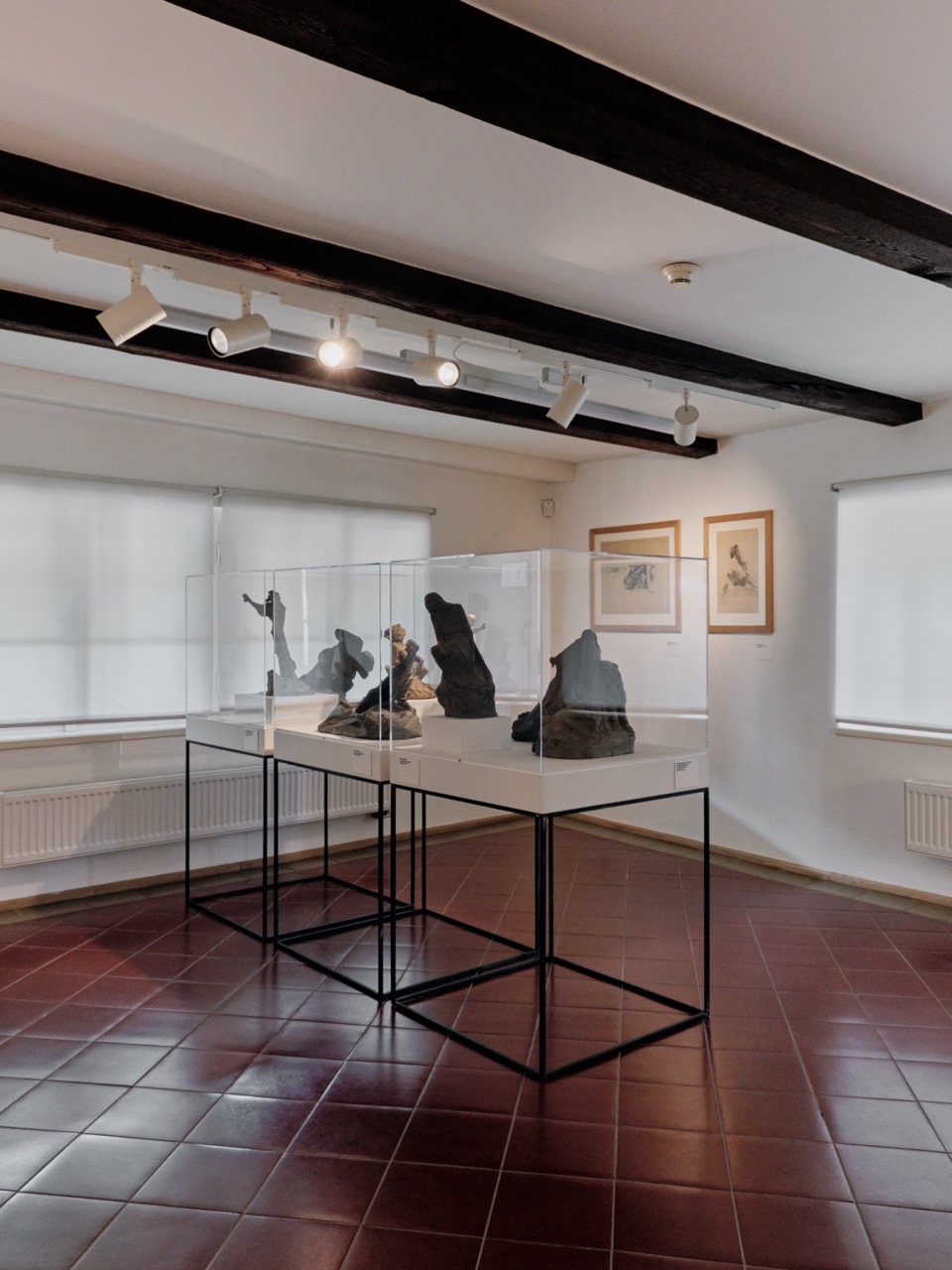
František Bílek, Entrance to the Temple Vestibule © Eda Babák
Photos in print quality are available here
Dates: A year-round activity
Curatorial and coordination team: Agáta Hošnová, Rebeka Pojarová
Co-operation: Marie Foltýnová, Karla Hlaváčková, Helena Musilová and external collaborators
Troja Château and its surroundings represent a unique space not far from the centre of Prague, where it is possible to explore and present topics related to urban historical space using contemporary artistic means. In 2026, in addition to providing the Château and its surroundings with installations of new works by artists of the youngest generation, we will continue our collaboration with Radio Wave, among others. In addition to exhibitions and art installations, we will also organise creative workshops and community-focused activities. A new feature will be a summer cinema project, whose film programming will build on the themes set forth in the exhibitions. The entire programme will thus be based on a combination of historical references, contemporary art and active community involvement.
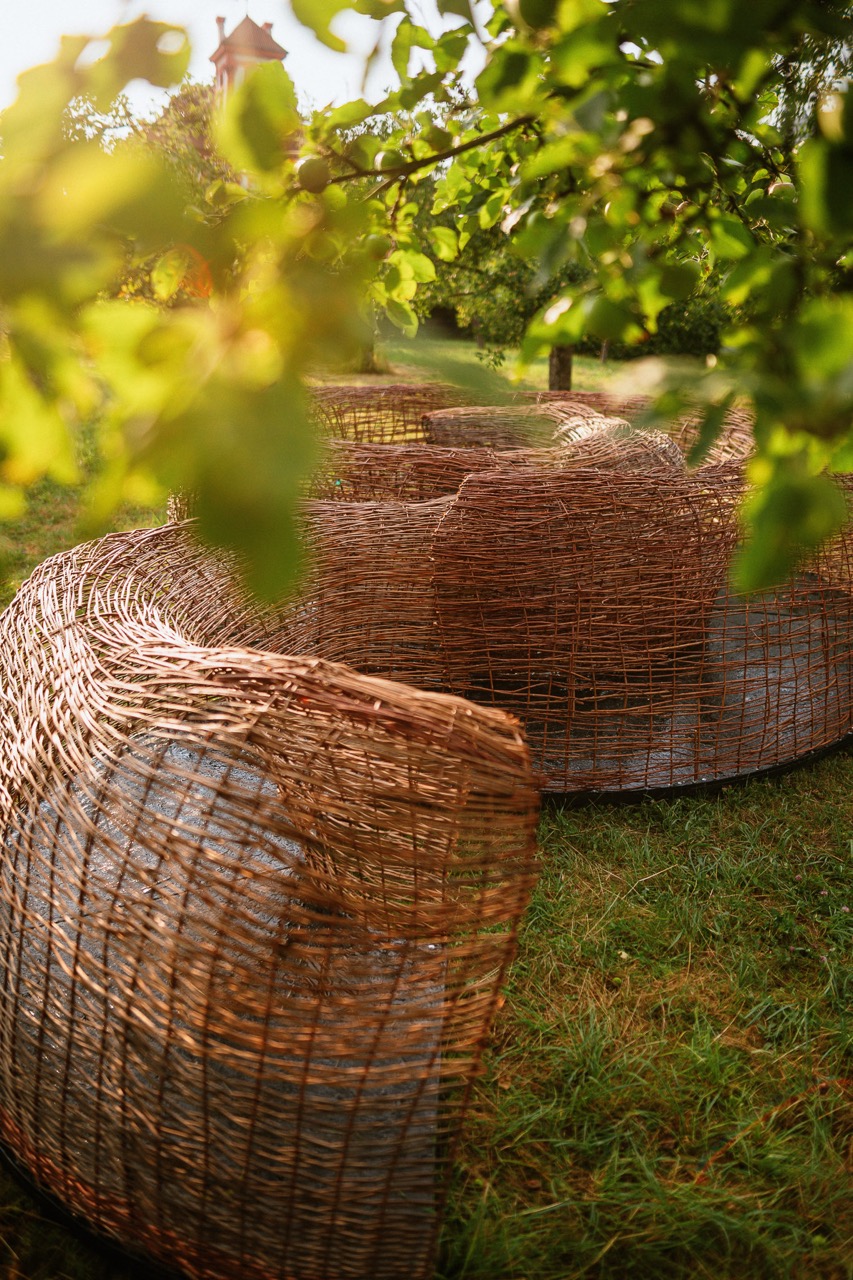
Riviera 2025: Antonie Hlavicová, Vrbění © Jan Hromádko
Photos in print quality are available here
Dates: 1 April – 29 October 2026
Curator: Karla Hlaváčková
Graphic design: Studio Anymade
Architectural design: Tereza Melková
Labyrinth – Structure, Maze, Metaphor. A place where wandering and searching for the direction are accompanied by uncertainty, tension and fear, influencing the maze walker’s decision about which way to go. Every decision is crucial, because without Ariadne's thread, it is difficult to retrace our steps. What leads us to make decisions? Understanding the structure? Fear of uncertainty?
The Labyrinth exhibition explores precisely these themes, confronting visitors with their attitudes and allowing them to walk through a labyrinth or maze, ultimately transforming them into critically thinking observers. Labyrinth and maze – two words, two forms of a path: a labyrinth offers a single winding route to the centre and back, while a maze presents detours and obstacles. History and mythology teach us that the boundary between them is often unclear, and perhaps it is precisely this tension that makes the pilgrim's journey meaningful.
Exhibiting artists: Klára Samcová, Eva Koťátková, Pavlína Kvita, Miroslava Večeřová, Erika Velická, Krištof Kintera (from GHMP collection).
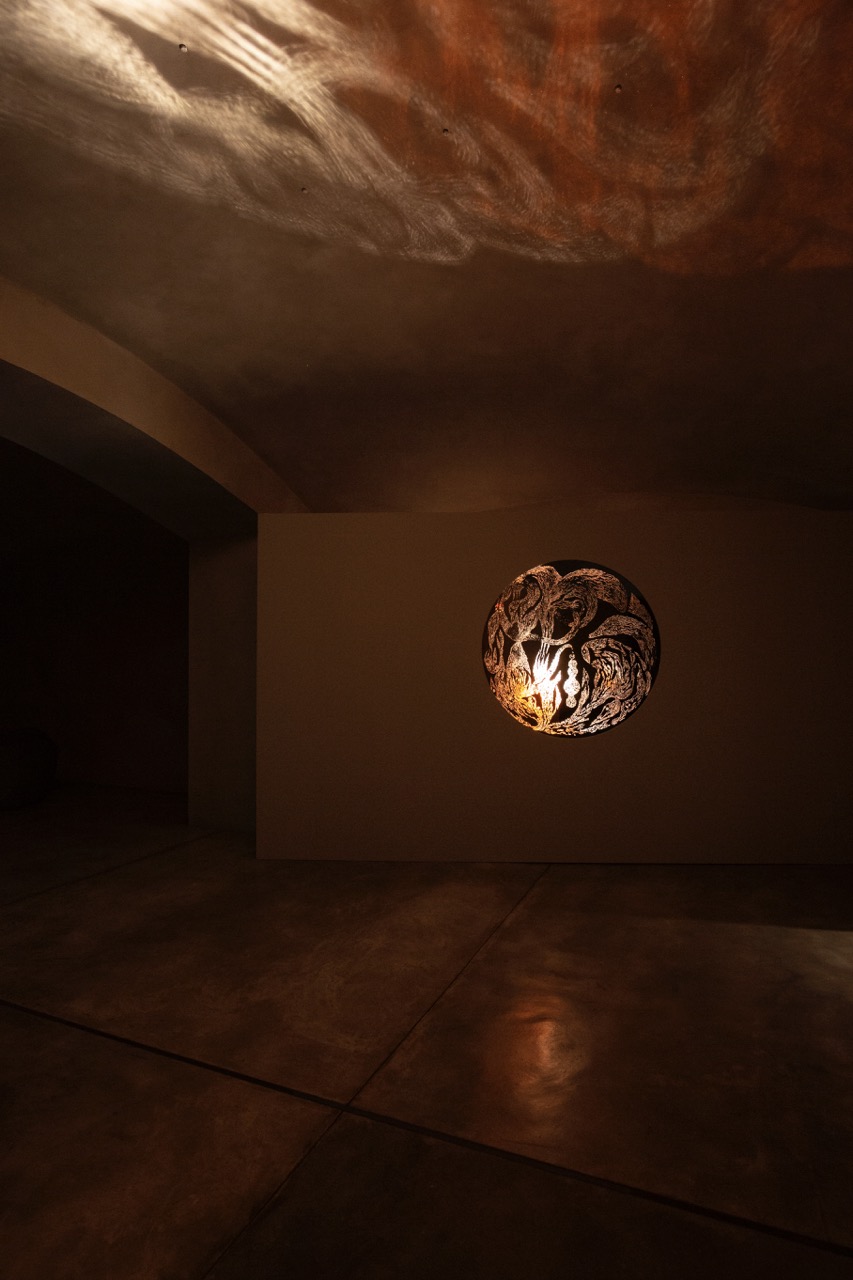
Tereza Bartůňková, © Johana Němečková, photo from exhibition Hra, galerie Benedikta Rejta v Lounech
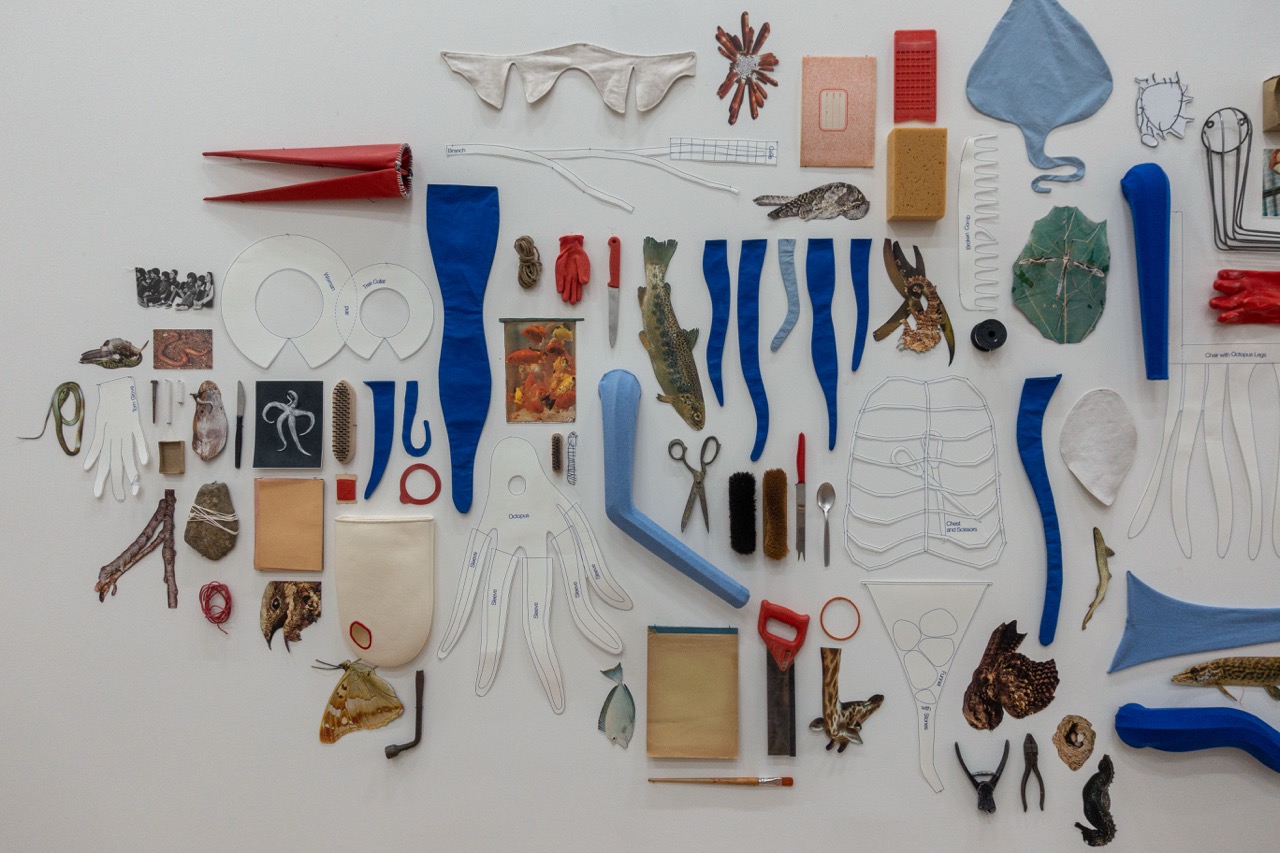
Eva Koťátková, The Machine for Restoring Empathy, 2019, © Sahir Ugur Eren, Istanbul Biennial
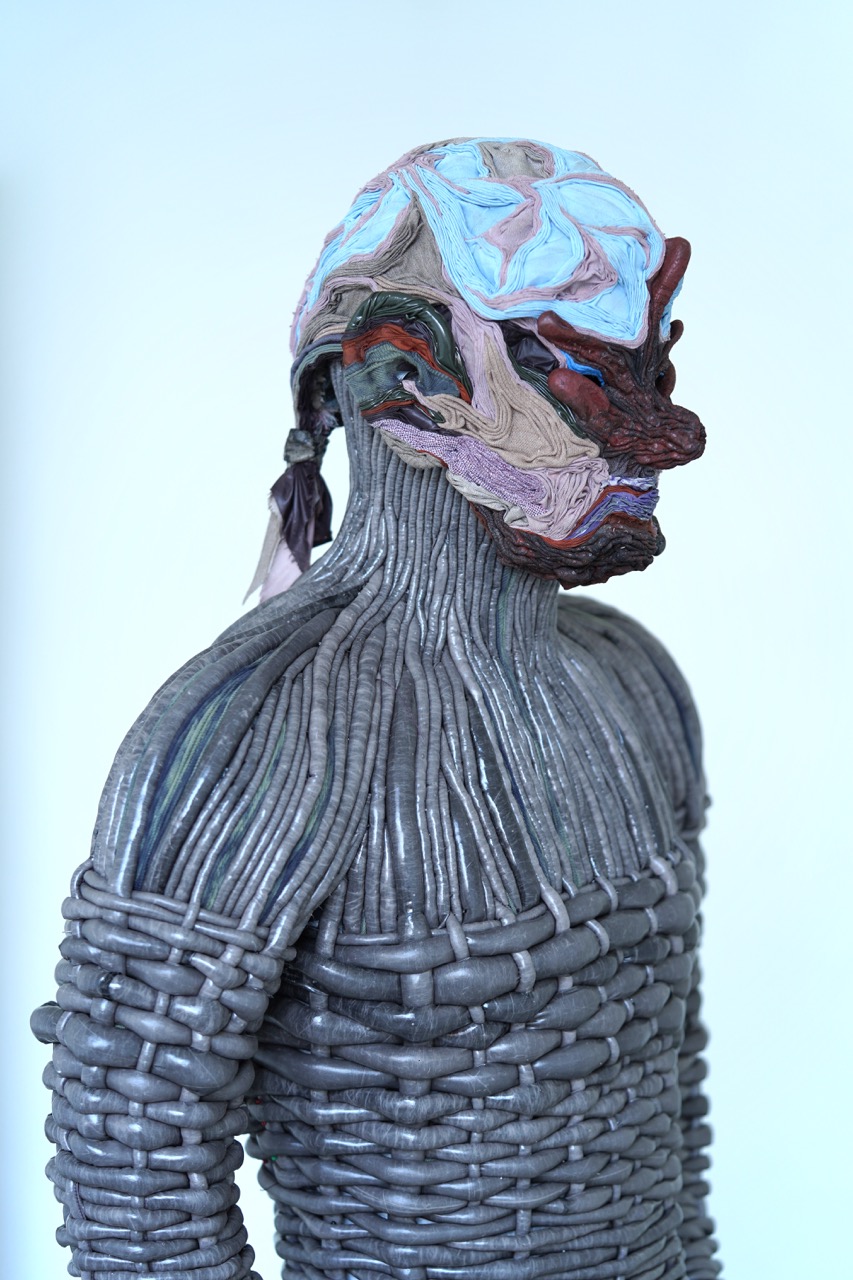
Dominik Styk, Naked Roots, 2024
Photos in print quality are available here
Dates: April–May 2026
In 2024, as part of the Festival for Travelling Audiences within the LCL project, a multi-day ritual ceremony was held to cleanse the fountain at the Kačerov metro station. The outcome of the project is a film that will be premiered as part of the installation at Vault 17, together with original costumes and music and a song by Amelie Siba, composed especially for this ritual and event with children from diverse social backgrounds.
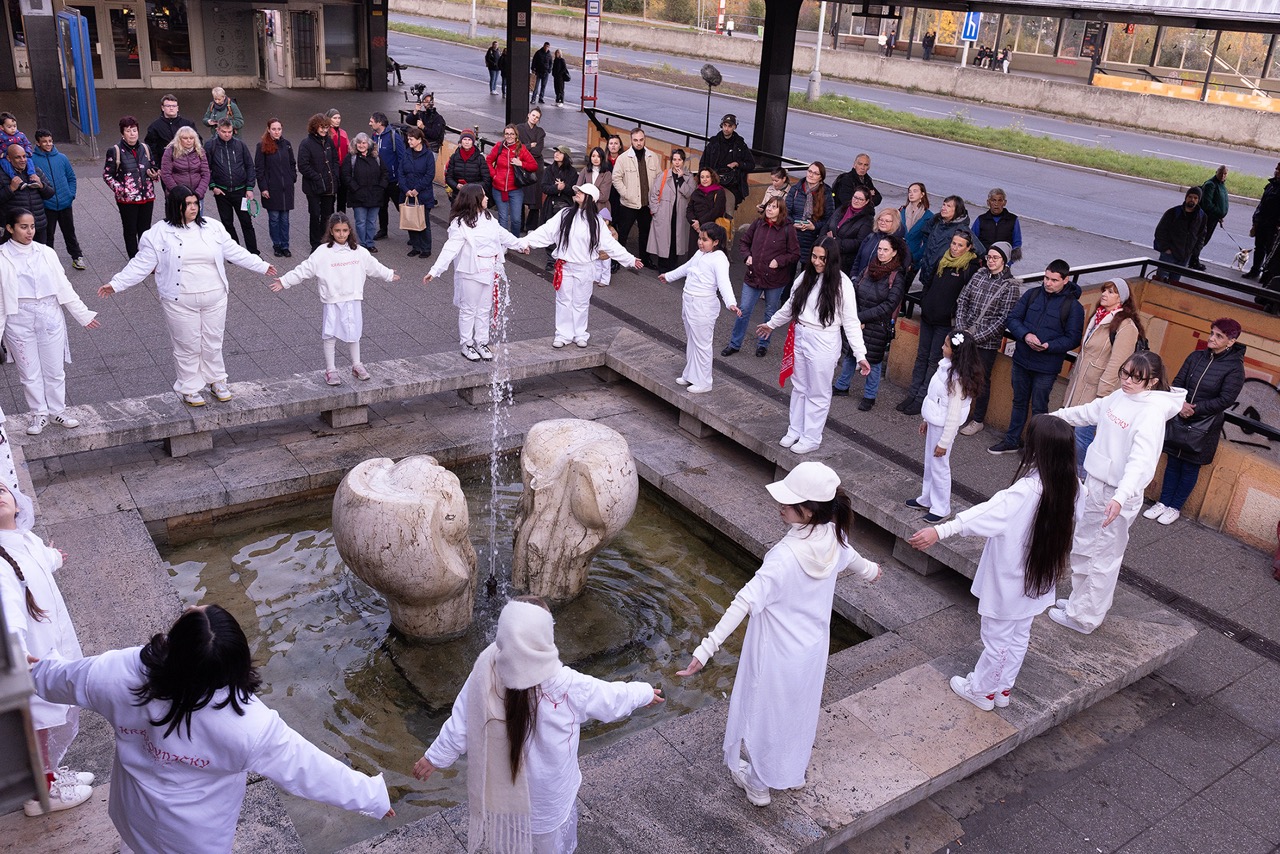
Královničky a řeka, Jakub Jahn a kolektiv © Adéla Vosičková
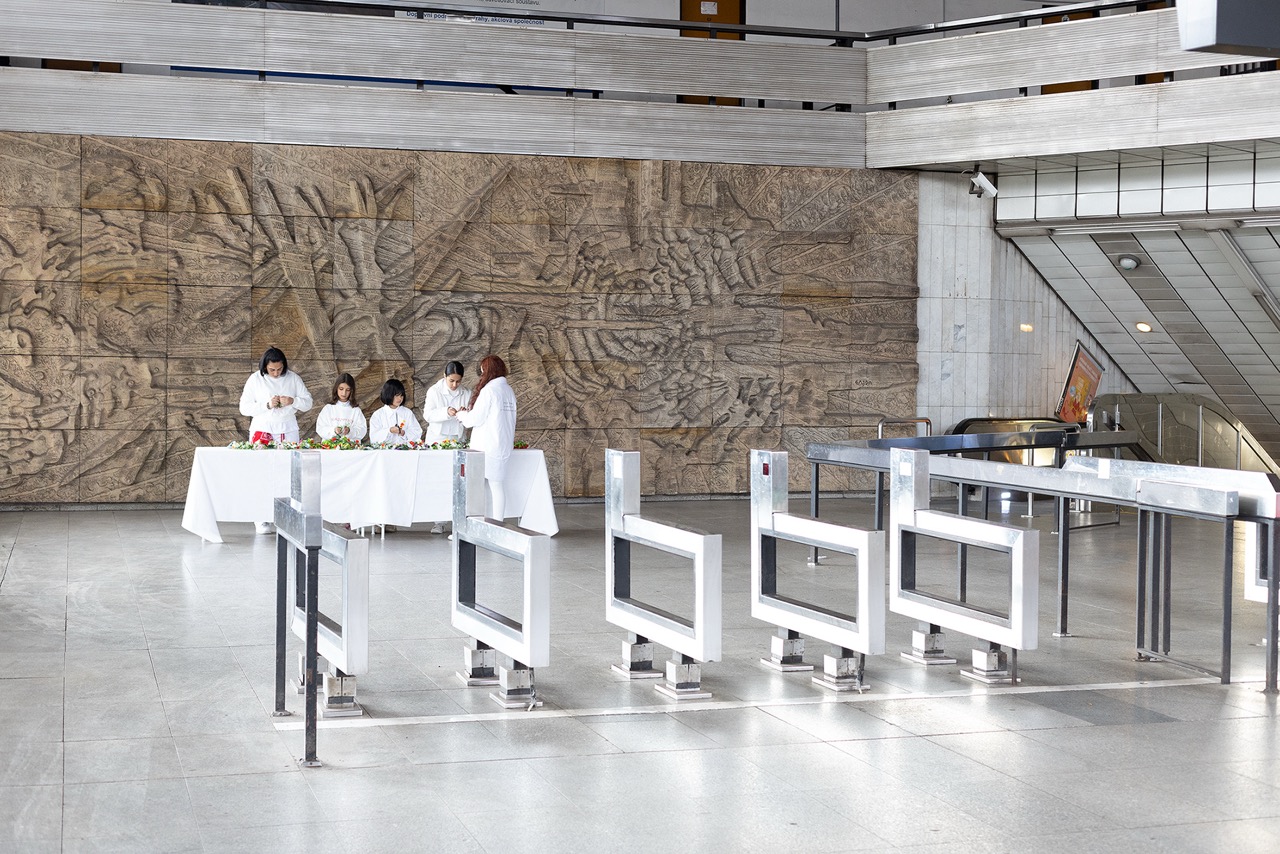
Královničky a řeka, Jakub Jahn a kolektiv © Adéla Vosičková
Photos in print quality are available here
Dates: October–November 2026
The concrete sculpture Balance by sculptor Josef Klimeš from 1990 near the Barrandov Bridge is in very poor condition. It is undoubtedly one of the most monumental works of art in the Czech Republic, if not in Central Europe. Prague has begun preparatory measures to save it. The exhibition will showcase Klimeš's work for public spaces, the history and construction process of Balance. The public will have the opportunity to learn about the project to preserve it or possibly create a faithful replica.
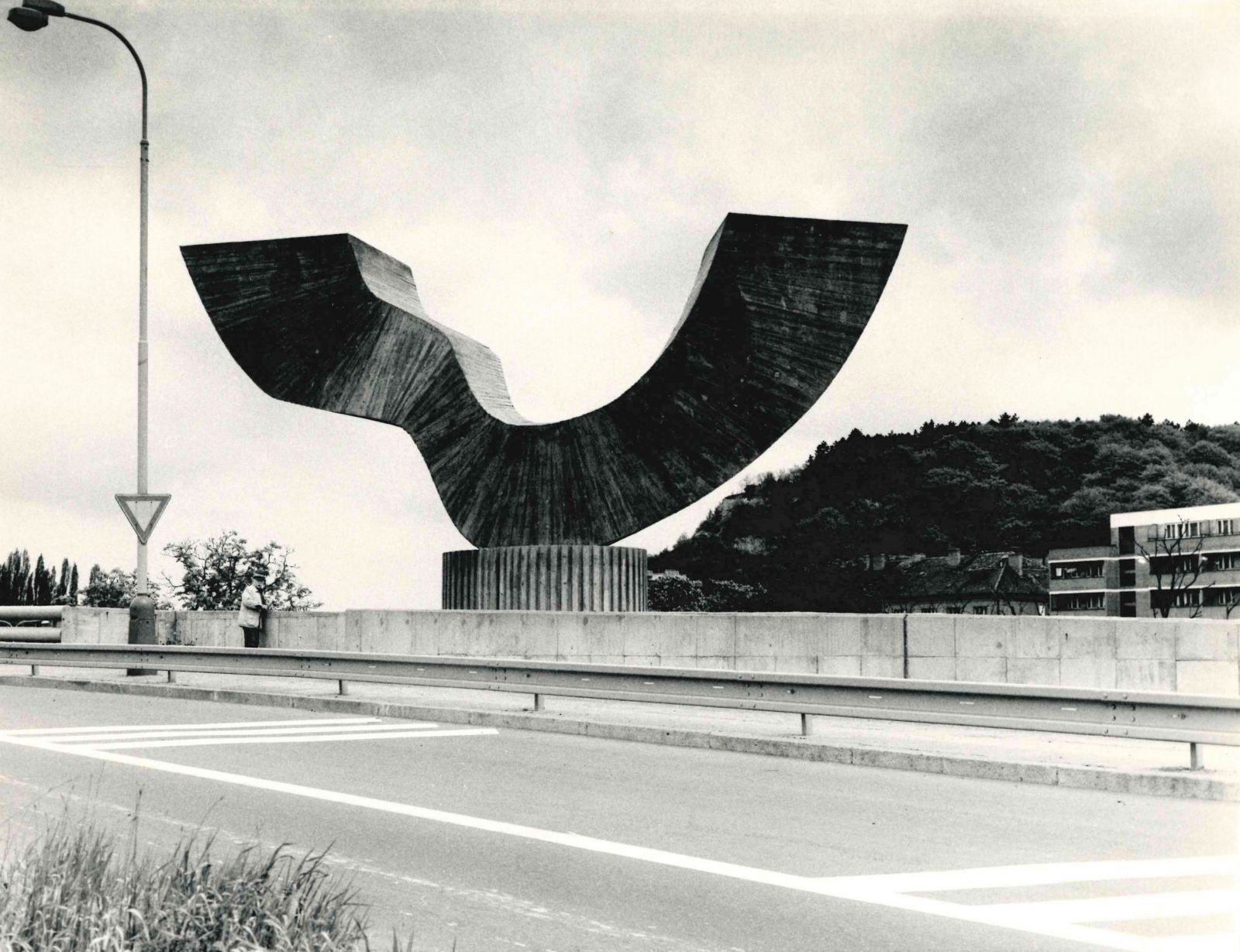
Josef Klimeš, Rovnováha
Photos in print quality are available here
Prague City Gallery manages a total of seven buildings. To enhance orientation for visitors, the gallery is gradually introducing unifying names for them in 2025.