
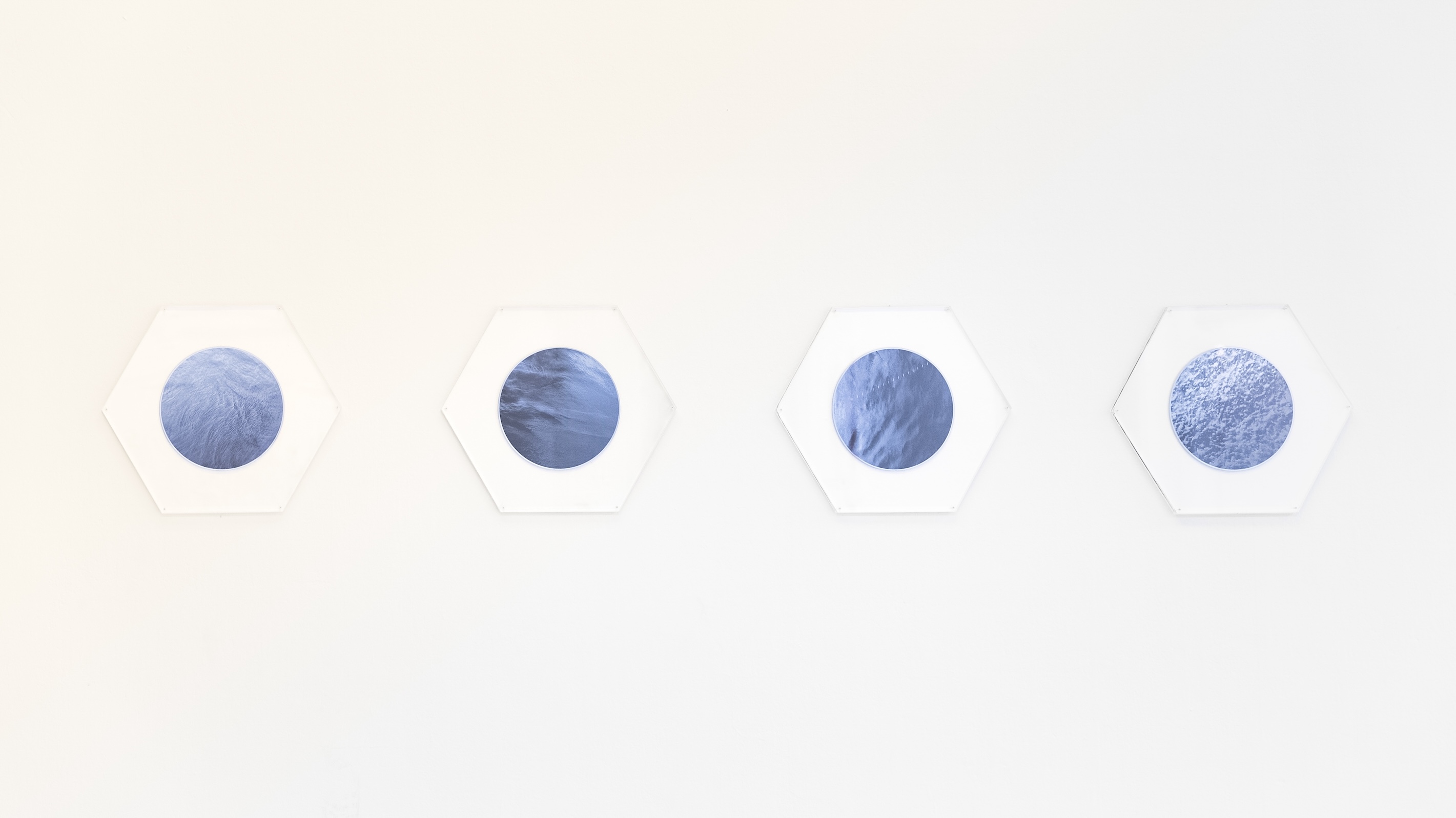
How do media and measurement technologies influence our perception of the world and our relationship to it? The Terra Incognita exhibition at Prague City Gallery will seek to answer this question.
Film essays and gallery installations will focus on the processes that, in the long term, link the representation of the Earth with its perception as a resource to be extracted and converted into capital. It will also highlight the fact that media and measuring devices themselves are reliant on the extraction of raw materials since their manufacture requires a wide range of minerals and precious metals. The multimedia project Terra Incognita, based on Martin Netočný’s comprehensive curatorial concept, will be open to the public at GHMP Dům fotografie from 1 October 2026 to 3 January 2027.
The first part of the exhibition will focus on politically and historically determined ways of perceiving and classifying reality. How we depict, describe and measure the world influences how we think about it. This section will demonstrate that even seemingly objective tools of knowledge, such as scientific units and methods of measurement, are not neutral, but developed within specific historical and social contexts. Through the lens of a video essay by Sasha Litvintseva and Beny Wagner, for example, we will examine a calculation error that remains embedded to this day in the internationally adopted unit of measurement, the metre. Using an installation by Agustina Woodgate, we will then subject the fundamental unit of matter – the single electron – to similar scrutiny.
The second part will then present projects that highlight the materials and their combinations, which, while forming the infrastructure of media technologies, are usually overlooked when we use them. For this purpose, the processes of recording, storing and reading information will be transformed into visible and audible performative events. The exhibition highlights this issue, for example, through an installation by Ioana Vreme Moser, which addresses the relationship between the encoding of information into microchip circuits and its gradual degradation. A similar connection between recording technology and the surrounding environment is also revealed in a video essay by Susan Schuppli, which observes the behaviour of a camera chip under Arctic winter conditions.
The exhibition’s concept is based on the term terra incognita, which Europeans used for centuries to denote unknown territories on maps – the so-called blank spots. As a result of this designation, they automatically viewed such areas from a distance, as territories that needed not only to be explored and described, but subsequently also occupied and exploited through the extraction of resources. This historically conditioned concept will be imbued with new meaning within the gallery space itself, a meaning that defies the logic of conquest. Through individual works of art, the exhibition re-evaluates the distance from the world that media technologies have given us and reminds us that we are dependent on natural resources and therefore bear a certain responsibility towards the planet.
The tension described between abstract models of representing the world and the increasingly urgent environmental demands, which defy these modes of representation and force us to re-evaluate established ways of understanding and classifying the world, is also reflected in the exhibition’s infrastructure. “Together with the architect Kateřina Radakulan, we have organised the installation on each floor around a set of four hemispheres reminiscent of halves of a globe or split atoms and electrons. Captions that graphic designer Zuzana Burgrová has designed to resemble geodetic survey marks are placed throughout the exhibition. These captions therefore do more than provide information about the individual works; they also symbolically frame and define the exhibition space,” explains curator Martin Netočný.
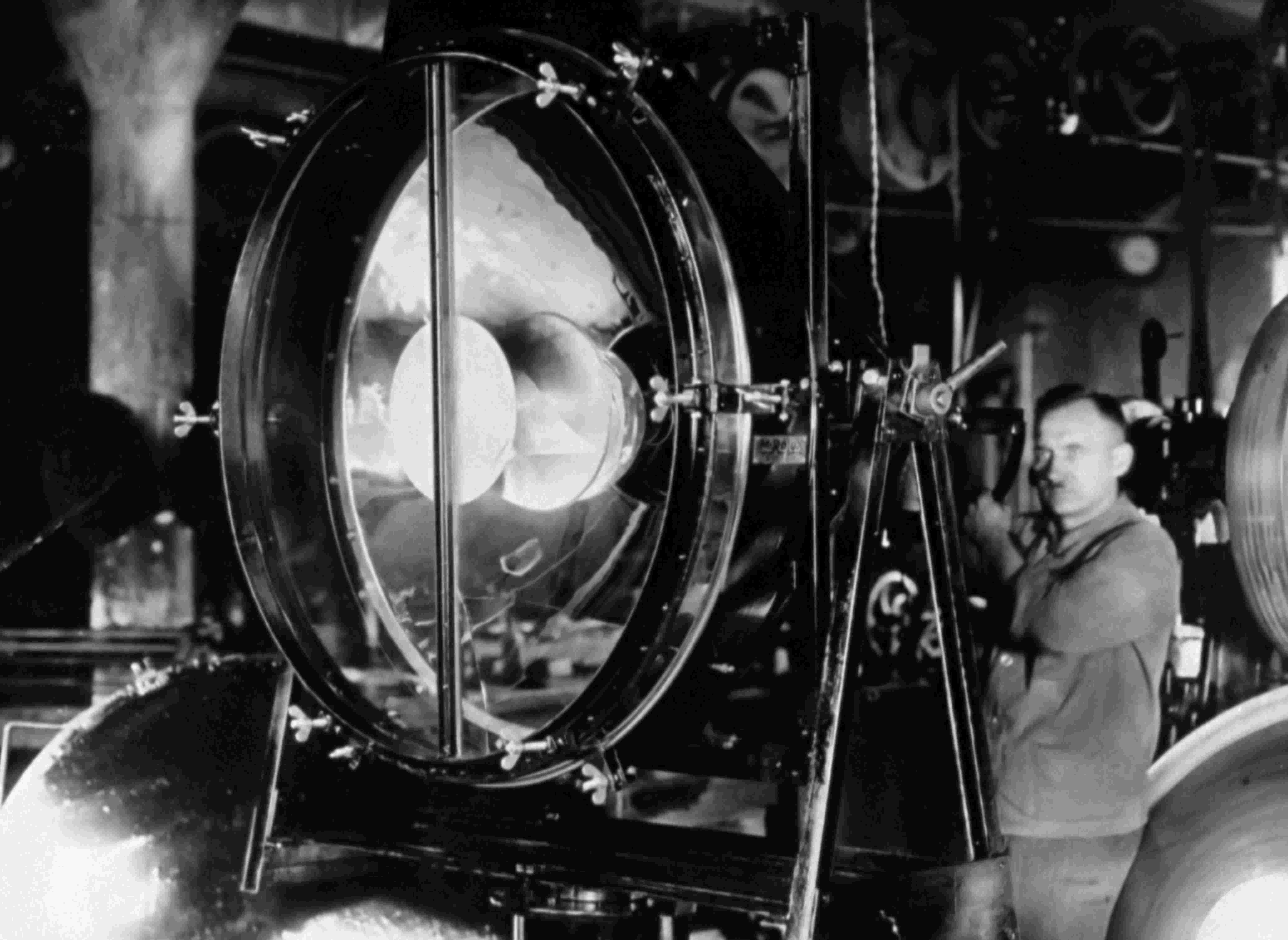
Harun Farocki, Images of the World and the Inscription of War, film still, 1989.
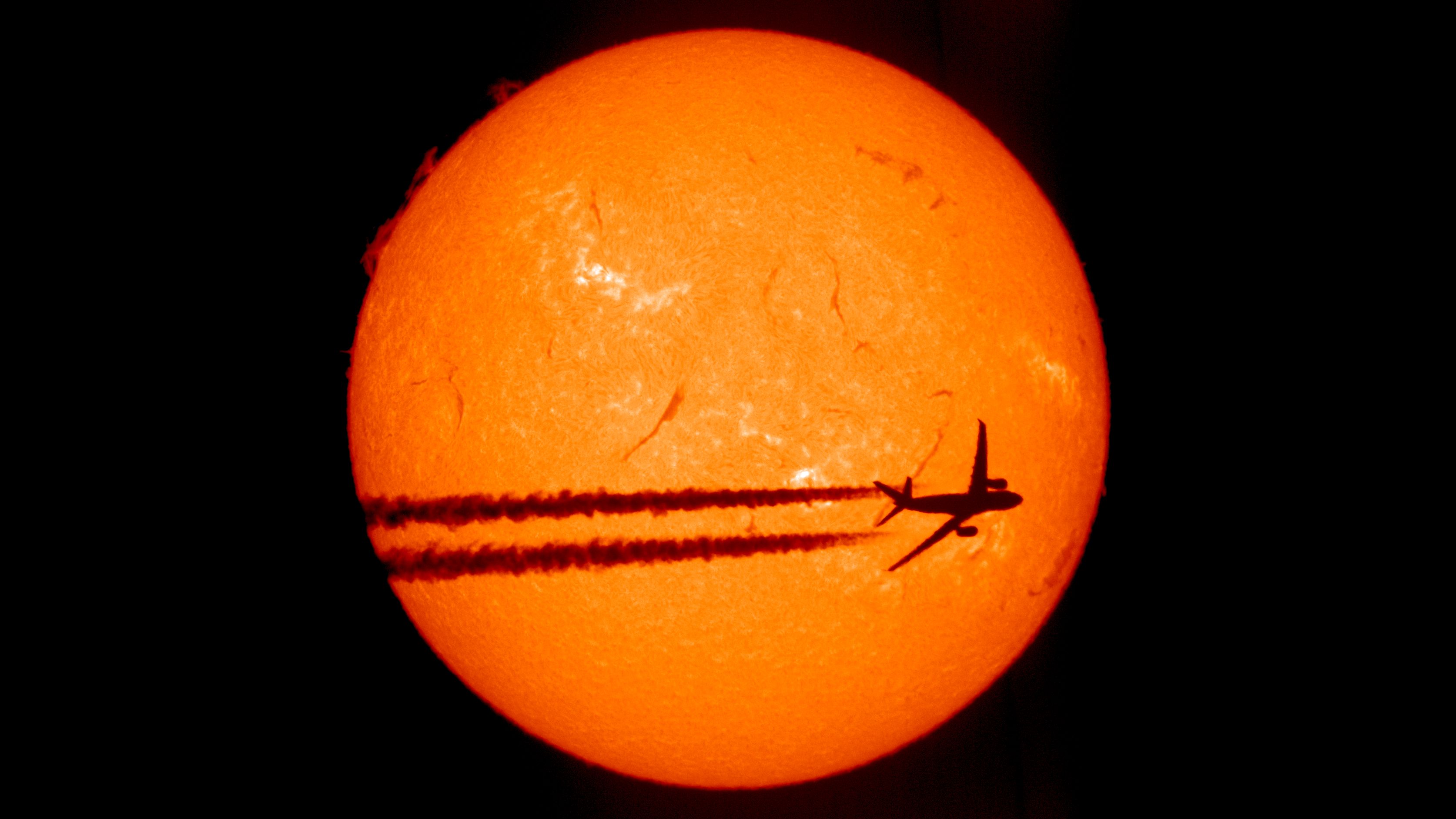
David Blandy, Sunspot, film still, 2023.
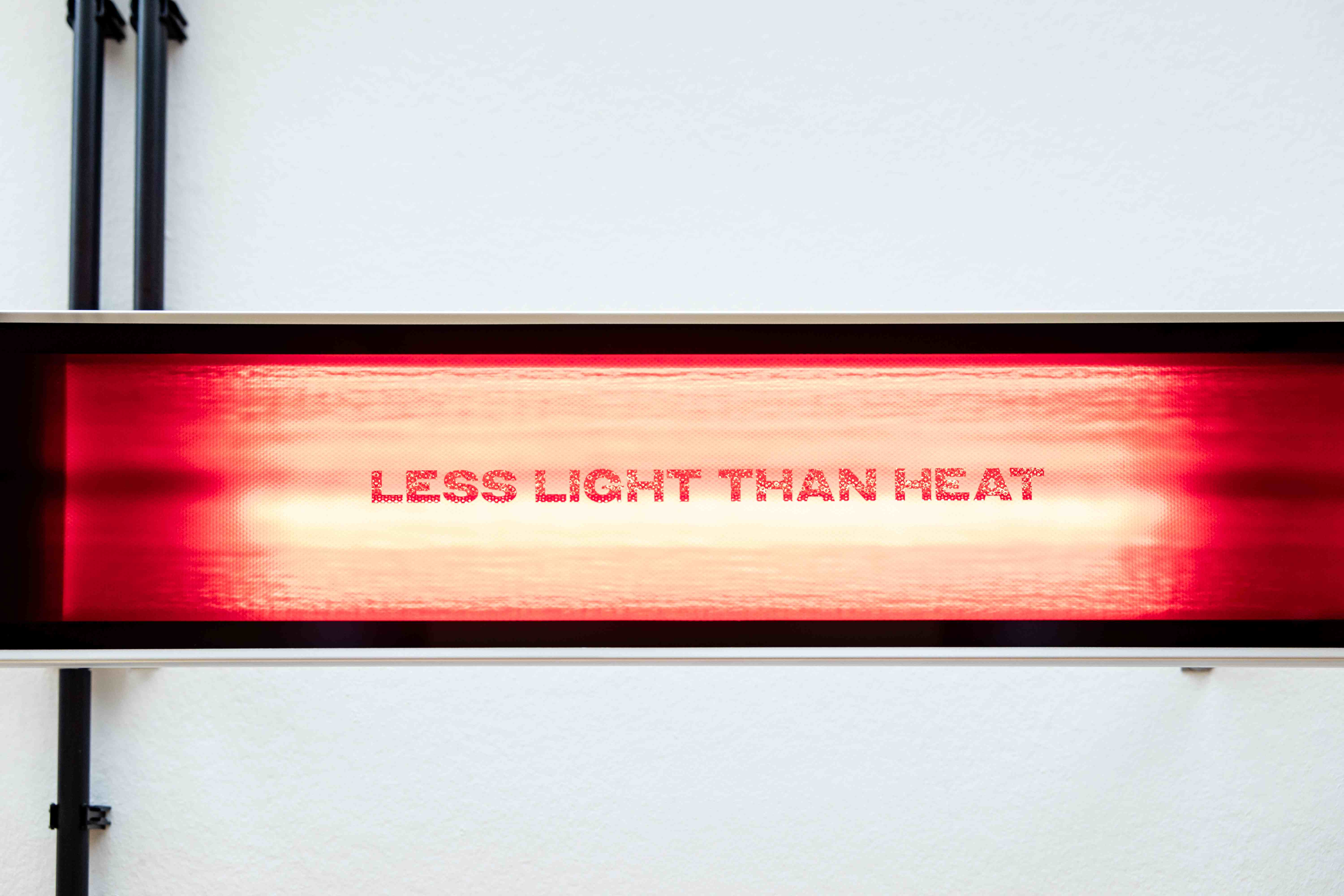
Agustina Woodgate, More Heat Than Light, installation view, photo: Studio Uittenbogaard, 2024.
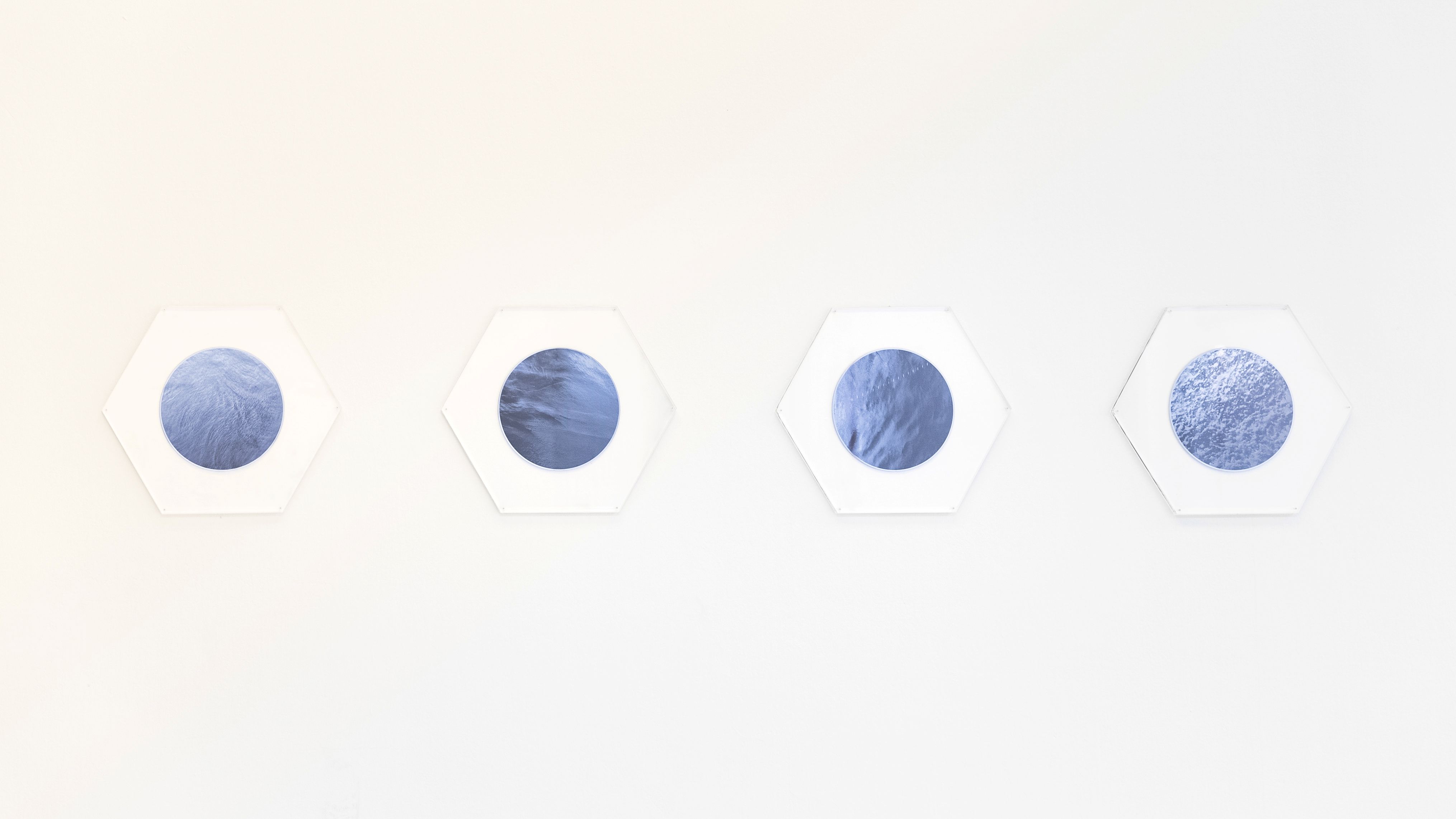
Su Yu Hsin, Particular Waters, installation view, photo: GRAYSC, 2023.
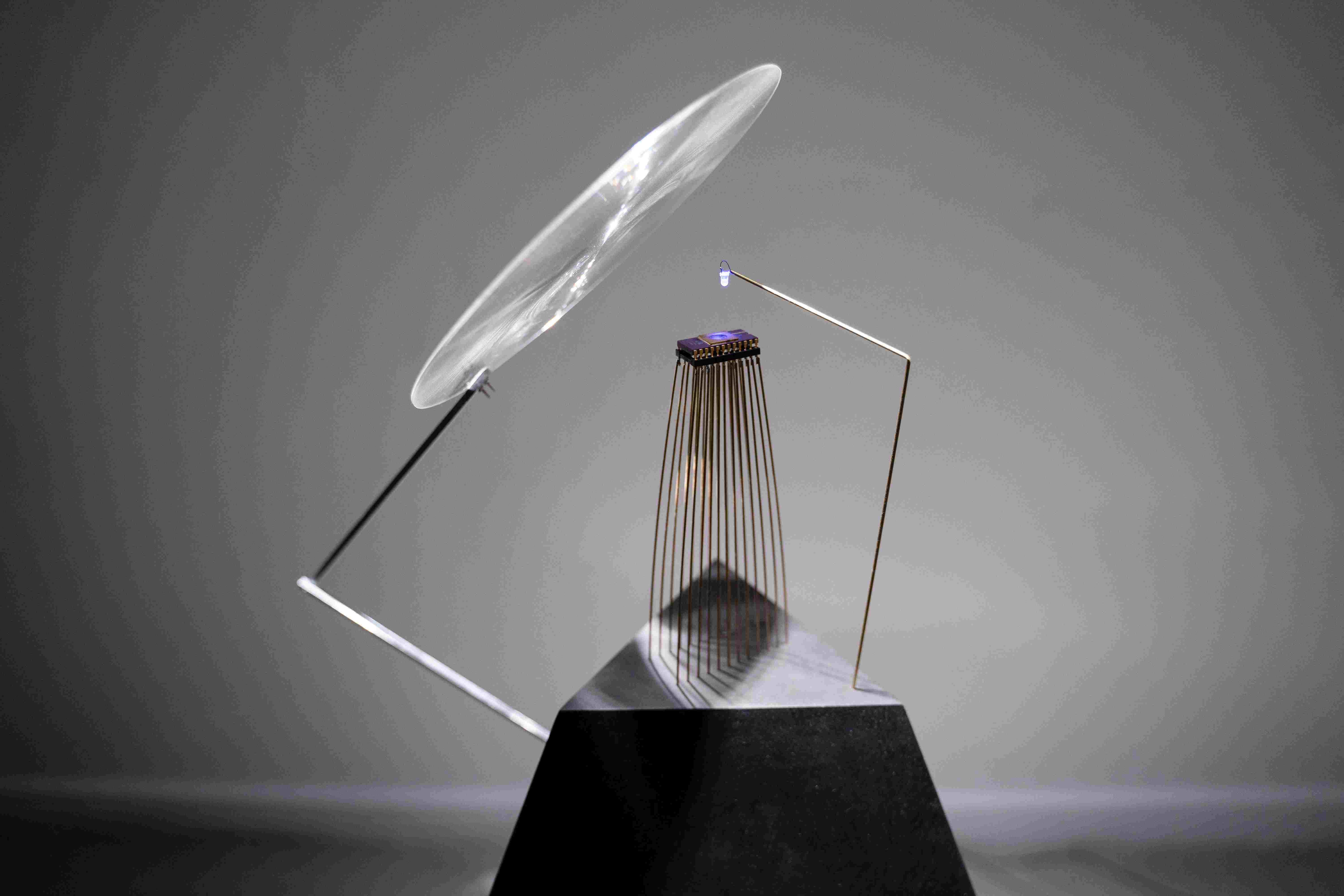
Ioana Vreme Moser, Mineral Amnesia, installation view, photo: Polina Davydenko, 2023.
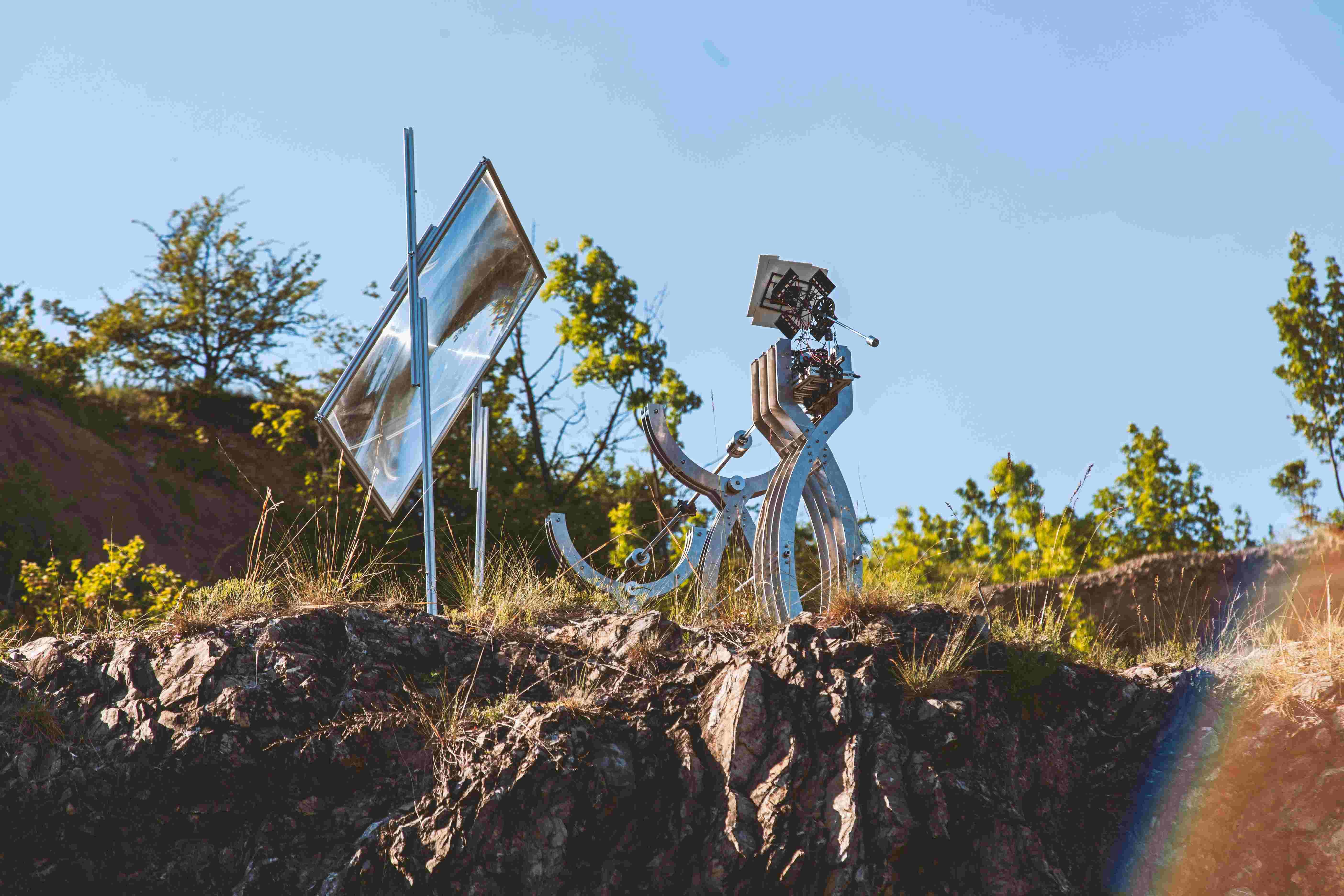
Kryštof Brůha, Inter Solaris, Rokovské údolí, 2019
Sasha Litvintseva & Bany Wagner, Constant, film still, 2022.
Photos of artworks in print quality are available here
The very movement of visitors through the exhibition space thus expands the theme of terra incognita beyond the individual works on display and allows the works to be perceived through one’s own spatial and aesthetic experience.
“Responsibility towards the planet and its resources can be viewed from many angles. Today’s advanced technologies exploit the Earth ruthlessly and perhaps more rapidly and thoroughly than we might realise when considering these processes, which appear clean at first glance. We tend to idealise the whole high-tech world as a sophisticated system of work and research practices; yet even this system is responsible for the uncontrolled consumption of scarce resources. We need to see this and be aware of it, just as the artists featured in this exhibition recognise it, approaching these issues with the necessary curiosity and urgency,” adds Magdalena Juříková, Director of GHMP.
1 October 2026 – 3 January 2027
Curator of the exhibition: Martin Netočný
Exhibiting Artists: David Blandy, Kryštof Brůha, Harun Farocki, Su Yu Hsin, Sasha Litvintseva & Beny Wagner, Ioana Vreme Moser, Bára Mrázková & Karolína Žižková, Susan Schuppli, Selmeci Kocka Jusko and Agustina Woodgate
Architecture: Kateřina Radakulan
Graphic design: Zuzana Burgrová
GHMP Dům fotografie
Revoluční 1006/5
110 00 Prague 1 – Old Town
Open
Tue–Sun 10 a.m.– 6 p.m.
Thu 10 a.m.– 8 p.m.
The building has wheelchair access.
For the latest information on the exhibition, accompanying programmes, guided tours and educational activities, please visit GHMP website.
Tickets are available through the GoOut network and at GHMP box offices.
The exhibition programme of Prague City Gallery is supported by the Ministry of Culture of the Czech Republic.
Partners:
Prague City Hall, Ministry of Culture of the Czech Republic, Goethe-Institut

Contact for Journalists
GHMP
Petra Čížková
Deputy Head of the Department of Communication, Events and Publishing
+420 725 818 721
petra.cizkova@ghmp.cz
www.ghmp.cz
EDUCATIONAL PROGRAMMES:
Saturday Art Workshops
Sat 31 Oct 2026, 1–6 pm, How to Photograph the Scent of the Forest, GHMP Education Centre
Sat 21 Nov 2026, 1–6 pm, How to Measure the World,
GHMP House of Photography
Sat 5 Dec 2026, 1–6 pm, The Gallery as an Experimental and Research Laboratory,
GHMP Education Centre
As part of the Saturday workshops, we will draw inspiration from the Terra Incognita exhibition, which explores how the ways we depict, measure and name the world influence our perception of nature and our place within it. It reminds us that technologies are not neutral tools, but arise within a specific historical and social context, while also prompting us to reflect on our dependence on natural resources and our responsibility to the planet. Through drawing, frottage, collage, monotype and three-dimensional art, we will explore alternative ways of recording, mapping and measuring the world around us. We will create our own tools and seek ways to capture what ordinary technologies miss: smells, sounds and sensations. In doing so, we will discover unexpected ways of looking at what surrounds us. The art workshops will develop sensitivity to different ways of understanding the world and foster the ability to think critically about how images, data and knowledge are formed. The workshops will also draw inspiration from the connections between art and scientific disciplines, such as physics, mathematics, chemistry, biology, sociology, psychology, history, philosophy and ecology, as well as from specific fields like cartography, meteorology and others. Workshop participants will, for example, be able to design their own fictional units of measurement, devise a concept for a research project investigating an imaginary phenomenon, and create new forms of measurement and recording – graphs, plans, diagrams, formulae, mind maps… They will also be able to interpret existing maps and plans in any creative way they choose, or test various fictional phenomena through experimental trials. They can also take on the roles of scientists or research teams. Through their own creative activity and by using their imagination, they can be encouraged to develop a positive attitude not only towards art but also towards science. For their art experiments, participants can use a wide range of paints and art materials, as well as vinyl records, CDs, magnetic tape, silver-bromide photographs and strips of film, all of which were once used to store information and data. In this way, the Education Centre will become an art laboratory.
Art workshops for adults and seniors / integration and intergenerational programmes
Thu 5 Nov 2026, 11 am–2 pm, An Imaginative Map of the Unknown, GHMP Education Centre
Thu 5 Nov 2026, 3–6 pm, An Imaginative Map of the Unknown, GHMP Education Centre
Fri 6 Nov 2026, 11 am–2 pm, An Imaginative Map of the Unknown, GHMP Education Centre
Fri 6 Nov 2026, 3–6 pm, An Imaginative Map of the Unknown, GHMP Education Centre
Through our artistic responses, we will focus on creating our own imaginary landscapes – personal maps of places and undiscovered spaces, where even the microcosm of matter forms individual structures and becomes part of a broader arrangement. By layering coloured marks and watercolour, we will seek our own way of recording the world around us. Participants will become explorers of unknown territories, which are not created according to precise rules or with the aid of modern technology or measuring instruments, but through their own sensitivity, intuition and inspiration from natural forms. We will use gestural painting techniques and work with natural materials. Together, we will prepare basic colour shades from natural sources readily available around us (such as spices or vegetables). In the second part of the programme, we will try our hand at creating collages from freehand paintings made with natural pigments, which we will then complement with drawing. While watercolour allows for spontaneity, chance and emotional expression, collage enables us to structure compositions, work strategically, arrange individual elements, make selections and imbue the resulting images with new meaning. By combining natural pigments, painting, drawing and collage, unique imaginary maps will emerge, each reflecting its maker’s creative process.
This programme is designed not only for adults and seniors, but also for their children and grandchildren as part of intergenerational encounters. These workshops are also open to foreign visitors.
THESE PROGRAMMES ARE SUPPORTED BY THE MINISTRY OF THE INTERIOR OF THE CZECH REPUBLIC AND THE CITY OF PRAGUE.
Interactive tours of the exhibition for all types of schools and other age and interest groups with the possibility of subsequent artistic response in the form of their own work. We adapt the events in terms of time, theme and level of difficulty to the specific requirements of each school.
Contact:
edukace@ghmp.cz
For dates of workshops and a range of other educational activities aimed at other target groups, such as disadvantaged or disabled visitors or parents on parental leave with their children, please see ghmp.cz/edukace.